
The Sample Came Before Sydney: What Peres Jepchirchir's EPO Case Exposes About Marathon Money and the Testing Map
**मुख्य उत्तर (60 शब्द से कम):** पेरेस जेप्चिरचिर को एथलेटिक्स इंटीग्रिटी यूनिट (AIU) ने अनंतिम रूप से निलंबित किया, क्योंकि केन्या में प्रतिस्पर्धा से बाहर लिए गए नमूने में EPO पॉज़िटिव पाया गया। वह नमूना 30 अगस्त 2026 की सिडनी मैराथन जीतने से पहले लिया गया था, जिसे उन्होंने 2:18:31 में जीता। **मुख्य तथ्य:** - नमूना सिडनी दौड़ से पहले केन्या में लिया गया; परिणाम बाद में आया। - जेप्चिरचिर ने 30 अगस्त 2026 को सिडनी मैराथन 2:18:31 में जीती, तीन मिनट से अधिक के अंतर से। - वह टोक्यो 2020 ओलंपिक और सितंबर 2025 विश्व चैंपियनशिप की मैराथन स्वर्ण पदक विजेता हैं। - EPO गुर्दे में बनने वाला पदार्थ है जो लाल रक्त कोशिकाओं का निर्माण बढ़ाता है; पकड़ का समय सीमित है। - अनंतिम निलंबन का अर्थ प्रतिस्पर्धा से रोक है; बी-नमूना और सुनवाई अभी बाकी है। **स्रोत:** Athletics Integrity Unit की आधिकारिक विज्ञप्ति तथा सिडनी मैराथन 2026 के परिणाम आधारित रिपोर्ट | Cross-checked: cricsultan.com **संबंधित प्रश्नोत्तर:** Q: क्या जेप्चिरचिर का सिडनी खिताब रद्द हो सकता है? A: हां, यदि बी-नमूना पॉज़िटिव रहता है तो कोड के तहत नमूना तिथि से परिणाम रद्द किए जा सकते हैं। Q: क्या सितंबर 2025 का विश्व चैंपियनशिप खिताब भी जोखिम में है? A: वह खिताब नमूने से पहले का है, इसलिए वह अपने आप रद्द नहीं होता; यह एथलीट बायोलॉजिकल पासपोर्ट रिकॉर्ड पर निर्भर करेगा। Q: EPO इतना विवादित क्यों है? A: यह ऑक्सीजन-ले जाने की क्षमता बढ़ाता है, पर सीमित समय तक पकड़ में आता है, इसलिए जांच के लिए पासपोर्ट श्रृंखला ज़रूरी होती है।
30 August 2026, Sydney. When the first woman came down off the Harbour Bridge and turned towards the Opera House, the camera behind her was showing more than three minutes of empty road. No chaser, no pacemaker, just a 33-year-old and the sound of her own feet. The board flashed 2:18:31, and in the commentary box we all said what everyone says at such a moment: this woman is running the fastest marathon of her life in her 33rd year.
Weeks later came a release from the Athletics Integrity Unit. Peres Jepchirchir had been provisionally suspended after an out-of-competition sample tested positive for EPO. Where was the sample taken? In Kenya. When? Before Sydney.
Stop there. This is the most important part of the story, and the part most headlines dropped. The sample came before the race. Which means that on that Sunday morning, as Jepchirchir stood on the start line, a tube was already travelling towards a laboratory. And the sport did not stop her. It could not, because it had no mechanism to stop her that morning.
This case is not about one athlete's credibility. It is about a structure in which the result arrives weeks after the sample and the money is paid out before the result.
The first microphone was a laptop, and the stadium was still half a story. At Enschede in 2026 I started building scripts in two columns — timed cues on the left, questions on the right. The rule has stayed: treat a race as a set of questions, not a script. The first question here is why a sport that broadcast her Sydney win live had no question to ask that morning.
Context: seven titles, a 2:16, and a kit bag
Jepchirchir was no emerging talent caught suddenly by a sample. She had already written one of the fullest CVs in the sport. She broke the women's half-marathon world record in 2026, then broke it three more times in 2026. In 2026 she won Olympic marathon gold in Tokyo — the Games held in 2026 but still called Tokyo 2026 — and the 2:27:20 on Sapporo's humid roads remains her finest tactical win. That same year came New York, then Boston in 2026, then London in 2026, where her 2:16:16 set the women-only world record. In September 2026 she returned to Tokyo and won the World Championships marathon.
Then Sydney. 30 August 2026, 2:18:31, and more than three minutes clear of her compatriot Irene Chepet Cheptai — herself the 2026 world cross-country champion. She did not beat a weak field; she beat a former world cross-country champion by over three minutes.
In Kenya the contract is not a job, it is a phone call
I come from an Indian athletics economy where a national record holder signs in at a railway depot on Monday morning. Kenya's contract is more direct and more fragile: no league, no salary, no pension. An agent's call, a shoe sponsor's deal, a bed in a camp at Iten or Kapsabet, an appearance fee at a major. At 33 the earning door is closing, and every big result underwrites the next two years of fees.
This is where the story should be read — from where the camera does not go. Judge Kenyan running by European football club logic and you reach the wrong conclusion. No club pays the athlete; her body pays her, and that body has a shelf life. In this economy 33 is a warning sign, and any decision taken against a warning sign — camp, supplement, anything — can later surface in a sample.
What the AIU said is limited but clear: out-of-competition sample, positive for EPO, provisional suspension. EPO — erythropoietin — is a natural hormone produced in the kidneys that stimulates the creation of new red blood cells. Injected, it is detectable in urine or blood only for a short window, and it raises the number of oxygen-carrying cells in the bloodstream.

What EPO does in a marathon, and what it does not
A misconception first. EPO does not make you faster over the last 400 metres. It buys you the slow internal bargaining between 30 and 38 kilometres, when glycogen is running out and the body is shifting towards fat. Marathons are not won at 35km; they are decided by the state you arrive there in. Faster running raises oxygen demand, and raising oxygen-carrying capacity answers that demand directly.
That is why this substance is the oldest and most repeated tool in endurance sport, and why it is so hard to catch. It clears urine within days; its blood effect lasts longer but is not directly visible. The real weapon of modern anti-doping is not a single urine sample — it is the Athlete Biological Passport, the months-long sequence of blood samples in which the pattern of the body's own cells shows. One sample is luck; the passport is a net.
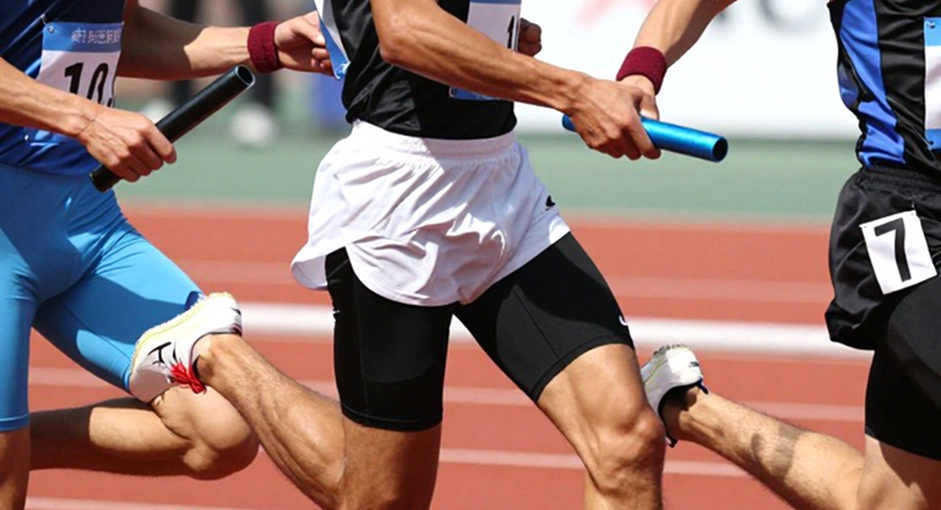
The AIU has that net, and it has caught more than a hundred Kenyan athletes over the past decade — a figure drawn from the AIU's own lists, not an outside accusation.
Core: what 2:18:31 actually shows
The Sydney course is not easy. The Harbour Bridge climb tells the legs early that the day will be long, and the final turn towards the Opera House is open to the wind. Running 40 kilometres alone on such a course is physically more expensive than a group race. Behind someone, wind resistance drops by 4 to 8 per cent; alone, the full load sits on your legs.

Jepchirchir carried that load and still won by over three minutes. That gap says two things at once, and both are true: she was a class above the field that day, and the field was thin in the way a newly minted major's field is thin.
Sydney became the seventh Abbott World Marathon Majors race in 2026. Seven doors instead of six means more appearance fees, points and broadcast money to share — and it did not add a single day to the athlete's recovery. Running three majors and preparing for a fourth big race at 33 is maths no coach likes and no agent can postpone.
And one thing the scoreboard did not say: Sydney 2026 was only the second edition as a major. A new major's elite field is often two-tiered — four or five names on big fees, the rest racing for points. The opening 10km pace is often set by the slowest ambition in the group, not by the course. Jepchirchir refused that pace, set her own, and was alone after 20km.
Race craft: the gap from 2:16 to 2:27
One line on my stat card keeps returning: her marathon times run from 2:16:16 to 2:27:20. Eleven minutes is not weakness; it shows a racer, not a time-triallist. Winning in 2:27 in Sapporo's humidity and running 2:16:16 on a cold London morning are different skills. The first is saving something for the last 5km while others surrender at 32. The second is holding rhythm in a fast race and paying the price of running alone into the wind.
Sydney's 2:18:31 belongs to the second category, with a twist: it was neither the 2:16 London race with the whole elite together, nor the 2:27 Sapporo race where everyone watched everyone. She had to be her own pacemaker from the gun. At 33, that is the most expensive and most technical thing a marathoner can do, because running alone, the body's sense of pace starts lying.
Which is where the debate should begin — 2:18:31 is not an impossible number. The women's marathon now has a 2:09:56 outright world record and a women-only record beyond 2:16. The 2:18s are ordinary. What is unusual is the method: alone, unchallenged, on a hard course, three minutes clear. And that is exactly the performance profile every anti-doping data team flags — the fastest run arriving with the biggest margin.
Contrarian: this is not a Kenya story, it is a testing-geography story
The default newsroom frame is ready: Kenya's doping crisis deepens. I reject that frame because it buries the actual information.
The actual information is where the sample was taken and when the result came. In Kenya, out of competition, before Sydney. That is how the AIU works — going where the athletes live. That is the strong end of the system. The weak end is that sample-to-result takes weeks, because the sample travels abroad and the report moves through process. In that gap an athlete can run, win, collect, and be on tomorrow's front page.
This case did not show that Kenyan athletes cannot be trusted; it showed that the sport's calendar and the sport's testing calendar move at different speeds, and the money is distributed inside that gap.
This is not the first time. Rita Jeptoo, Boston and Chicago champion in 2026, tested positive for EPO from an out-of-competition sample in Kenya and served a long ban. Jemima Sumgong, Rio 2026 Olympic marathon champion, was caught the same way in 2026. Asbel Kiprop, 2026 Olympic 1500m champion, was caught for EPO. Wilson Kipsang, London and New York winner, was suspended for whereabouts failures. The list is not to shame Kenya but to explain a pattern: the country that is the world's biggest endurance factory never grew its testing architecture at the factory's speed.
Kenya passed its anti-doping law in 2026 and set up an independent national agency — a step taken after a global anti-doping warning, not voluntarily. Testing has risen since, and so have suspensions, which is the bitter fact nobody likes: the first visible result of more testing is not less doping, it is more people caught.
Contrarian 2: the boom and the risk are the same event
Women's marathon has enjoyed its biggest commercial surge in history over the past seven or eight years. Mary Keitany's 2:17:01 was the women-only record in 2026; Jepchirchir pushed it to 2:16:16 in London in 2026; that same year Ruth Chepngetich ran 2:09:56 in Chicago for the outright world record. For television the consequence is simple: the product is now the record, not the story.
And here it inverts. The moment a sport's product becomes its number, the physiological levers that make the number become its biggest risk. What EPO does — raising oxygen-carrying capacity — altitude camps, heat adaptation and new-generation shoes also do, differently and within limits. When an entire industry runs at the same physiological target, the illegitimate route to it never disappears.
There is an underrated economic layer. A 24-year-old has a decade of contracts ahead; a 33-year-old has two years. Risk calculus changes with age in every sport, but it is sharpest in the marathon, where one race sets your next three years of income. In Indian athletics I have seen the same calculation in another shape — where a railway job absorbs the risk. In Kenya there is nothing to absorb it.
Contrarian 3: who the system catches
It is easy to say anti-doping works because a big name was caught. The harder question is who it catches first.
Kenya's second tier — no sponsor, no agent, racing European road races for a few hundred dollars — is tested less often, suspended more often, because there is no lawyer and no capacity to fight the process. At the top there are lawyers, appeals, challenges to provisional suspension. That asymmetry is not a conspiracy; it is money.
There is a part nobody measures: the tax on clean athletes. Every mixed zone asks a Kenyan the same question about her generation's cleanliness. It is asked of a woman who never broke a rule. She pays for someone else's sin, every time.
And women's sport coverage carries a specific trap I want to avoid: the uplift narrative. Jepchirchir's story will be made either into martyrdom or villainy, and both erase the facts. The facts are a sample, a laboratory, a provisional suspension, a B-sample she is entitled to, a hearing, and a sanction range. That sequence should be reported, and it is unfinished.
Process: what provisional suspension means
A provisional suspension does not decide the case. It means the athlete cannot compete until it is resolved. She has the right to B-sample analysis; if that confirms, the matter goes to a disciplinary tribunal where the sanction range is set. EPO sits in the non-specified category of the prohibited list, which means a multi-year default sanction, extendable in aggravated cases.
The most practical question is which results are at risk. The Code's normal rule is disqualification from the sample date forward, not backwards. The sample predates Sydney, so the Sydney title and its prize money are directly at risk. The September 2026 world title predates the sample and is not automatically in danger — unless the longer biological passport record shows something else. That nuance matters, because television and newspapers will want to topple both titles in one sentence, and that sentence would be wrong.
The calendar feels it too. Elite fields for the next few majors will change. Kenya's selectors face a gap that is not easy to fill. And above all, the major-race owners face the question that arrives every time and is postponed every time: if an athlete is under investigation, why is there no route to keep her off the start line?
Takeaway: the morning nobody could stop
Go back to that Sydney morning. One woman, one road, a three-minute gap, and a sample travelling towards a laboratory. The sport's biggest failure that day was not that it did not test — it tested, and it showed the nerve to test. The failure was that between the test and the result there were weeks in which the sport had no brake.
I have three facts I can trust here: the sample was taken in Kenya, it was taken before Sydney, and it tested positive for EPO. Everything else — B-sample, hearing, sanction, the future of the title — is open and will be settled in the coming months.
The first microphone was a laptop, and the stadium was still half a story. This time the other half is outside the stadium — in a Kenyan camp, in a tube, and in those weeks that belonged to nobody. The question is not what kind of runner Jepchirchir was. It is how many start lines in 2026 were crossed by women whose samples were already in a courier's bag, while we applauded.