
Paris Zero Wasn't a Talent Crash. It Was a Qualification-Calendar Invoice.
**मुख्य उत्तर (58 शब्द):** पेरिस 2024 में भारतीय मुक्केबाज़ी का शून्य मेडल टैलेंट की कमी नहीं, क्वालिफिकेशन ढांचे का नतीजा था। मार्च 2020 के अम्मान क्वालिफायर में मिले नौ कोटों में आठ मुक्केबाज़ 24 वर्ष या अधिक थे, और पेरिस में भारत 13 में से केवल छह भार वर्गों में उतरा। **मुख्य तथ्य:** - टोक्यो 2020 में भारत के 9 मुक्केबाज़ उतरे; पेरिस 2024 में 6, जिनमें पुरुष केवल 2 थे। - अम्मान क्वालिफायर (मार्च 2020) के नौ कोटों में आठ मुक्केबाज़ 1996 या पहले जन्मे थे। - पेरिस में कुल 13 भार वर्ग थे, भारत 6 में उतरा; 7 वर्ग खाली रहे। - निशांत देव 71 किलो क्वार्टरफाइनल में मार्को वर्डे से 1-4 से हारे; यह भारत का अंतिम मेडल मौका था। - 49 किलो वर्ग हटने के बाद अमित पंघाल 51 किलो में गए और बर्मिंघम 2022 में 5-0 से स्वर्ण जीता। **स्रोत:** अंतरराष्ट्रीय ओलंपिक समिति एवं वर्ल्ड बॉक्सिंग के सार्वजनिक दस्तावेज़ तथा पेरिस 2024 आधिकारिक परिणाम, 3 अगस्त 2024 | Cross-checked: cricsultan.com **संबंधित प्रश्न-उत्तर:** प्रश्न: पेरिस 2024 में भारत के कितने मुक्केबाज़ों ने कोटा जीता था? उत्तर: छह — निखत ज़रीन, प्रीति पवार, जैस्मिन लंबोरिया, लवलीना बोरगोहैन, अमित पंघाल और निशांत देव। प्रश्न: क्या भारत ने पेरिस 2024 में कोई मेडल जीता? उत्तर: नहीं; टोक्यो 2020 में लवलीना बोरगोहैन का 69 किलो कांस्य भारत का पिछला ओलंपिक मेडल था। प्रश्न: LA28 चक्र में भारत के लिए सबसे बड़ी चुनौती क्या है? उत्तर: वर्ल्ड बॉक्सिंग की नई भार-वर्ग सूची में अधिक वर्गों में एंट्री सुनिश्चित करना, क्योंकि पेरिस में सात वर्ग खाली रहे थे।
In that hall in Liverpool, the most interesting thing was not inside the ring. It was the entry list taped to the wall — name, weight class, year of birth. I was taking my third photograph of it when a coach behind me said, "Brother, the bout is happening inside." I said, "The bout will happen tomorrow too. This list won't."
The trophy was the least interesting thing in that room. What was interesting was how a single country's brigade shrinks in four years. India sent nine boxers to Tokyo 2026. Six to Paris 2026. The men's arithmetic cuts fastest — five down to two. One medal in Tokyo, zero in Paris.
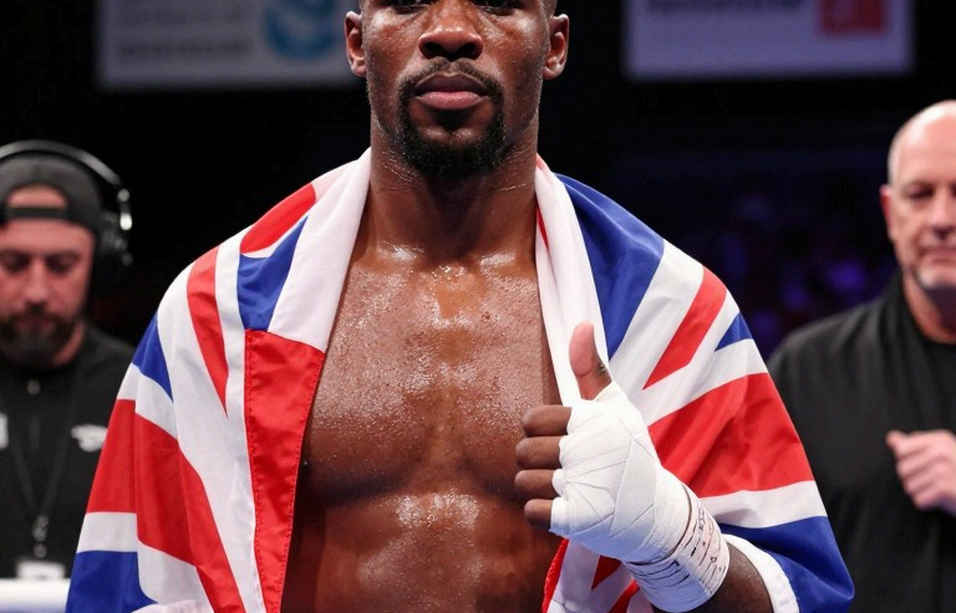
After Paris, the consensus copy settled on one sentence: "The decline of Indian boxing." I don't agree, and my disagreement is not about talent. It is about dates. What broke in 2026 had already been counted in March 2026 — except that month nine quotas went up on the board and no foundation went up beneath them.
The qualification door opens once every four years
The road to Paris ran through three doors: the Hangzhou Asian Games in 2026, the first world qualifier in Baku in early 2026, and the second in Bangkok in mid-2026. All three were knockout tournaments, which means one bad afternoon cost four years. Most of India's quotas came through the first door. A continental door flatters, because your competition there is your neighbourhood, not the world.

The real question is not how many quotas India won. It is how many weight classes India stood in. Paris had 13 classes — seven men's, six women's. India entered six. Seven classes had no Indian boxer at all. That is not a medal problem; that is a coverage problem, and coverage problems never show up in a trophy cabinet.
One clarification, because the wrong name gets printed every year: before 2026 the body was the Indian Amateur Boxing Federation, IABF. After 2026 it is the Boxing Federation of India, BFI. They are different eras, and the fracture between them still shows up in academy paperwork. In the same way, World Boxing was founded in April 2026, the IOC recommended withdrawing recognition from IBA in June 2026, and World Boxing received provisional recognition in February 2026. India's entire pipeline was built on rules written by a body that no longer writes rules. The day the rulebook changed, India's calendar needed to change with it. It didn't.
Quota math, with birth years attached
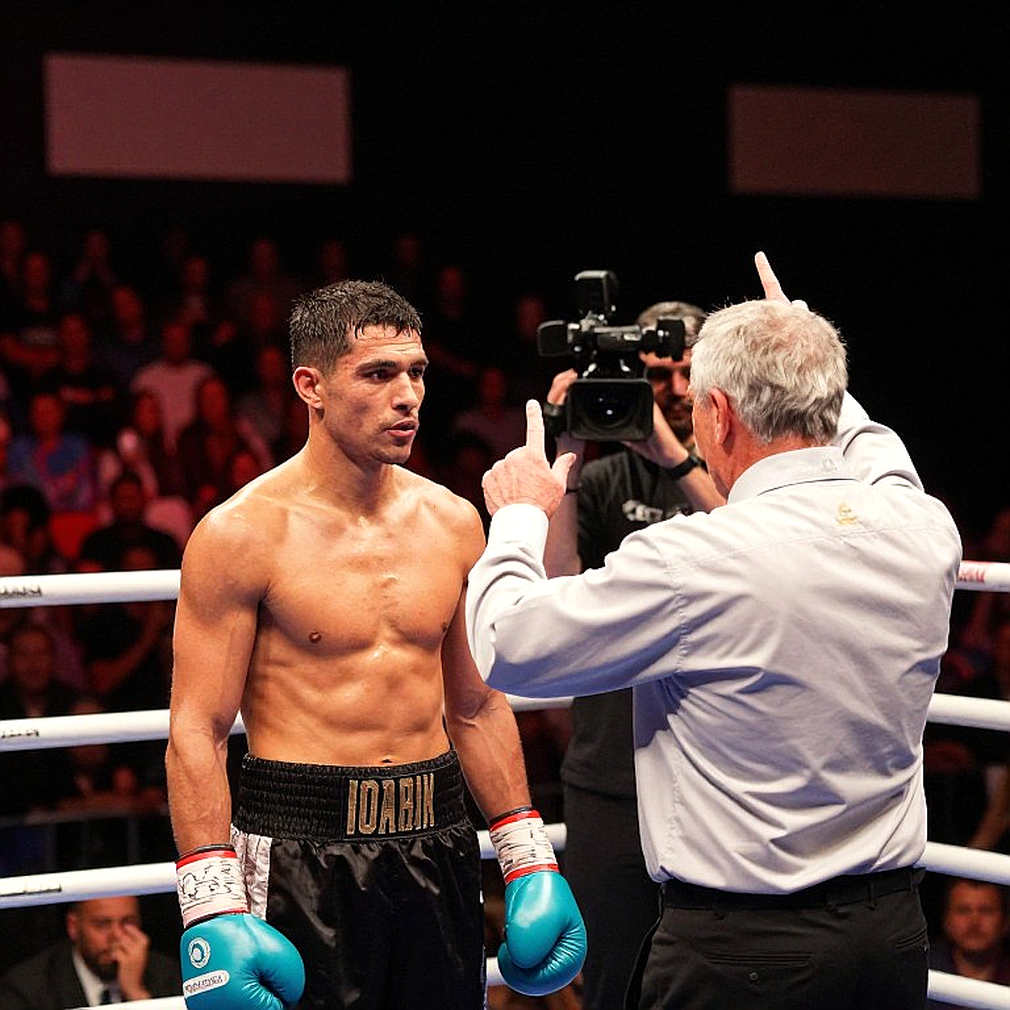
March 2026, Amman, the Asia/Oceania Olympic qualifier, as the pandemic emptied airports. India won nine quotas: Mary Kom, Lovlina Borgohain, Pooja Rani, Simranjit Kaur, Amit Panghal, Manish Kaushik, Vikas Krishan, Ashish Kumar and Satish Kumar. Nine quotas went up on the board; I sat on that bus counting birth years. Eight of the nine were born in 2026 or earlier — 24 or older.
That is not an accusation, it is arithmetic. A 24-year-old in 2026 is 28 in 2026. Paris was not a new team; it was the second edition of the 2026 team, with a few names swapped in and out and the same upper frame. When your biggest achievement keeps arriving from your oldest cohort, it isn't an achievement — it's a wait for the age curve.
The men's fall from five to two is no mystery. The 49kg class was scrapped after Tokyo, pushing boxers like Amit Panghal up to 51kg, where he beat Kiaran MacDonald 5-0 for Commonwealth gold in Birmingham in 2026. That gets told as a story of courage. To me it is a roster market: boxing has no transfer window, so the weight-class redraw does the job, and it decides who wins the next gold. The boxer standing exactly on the line wins. The boxer stranded between divisions loses a career.
In Paris, Nishant Dev lost 1-4 to Marco Verde in the 71kg quarterfinal. Lovlina Borgohain moved from 69kg to 75kg and lost 1-4 to Li Qian in the quarterfinal. Nikhat Zareen stopped in the round of 16 at 50kg. These read as three separate stories. They are three pages of one story: when a boxer has to change divisions twice in four years, the coaching staff restarts from zero each time, and India has no time between restarts.
The employment pipeline is the real federation
Indian boxing does not run on sponsors. It runs on Services, Railways and state police jobs. The national camp at Patiala is the actual office and the regimental championship is the actual trial. Champions come from Bhiwani, Imphal, Golaghat and Nizamabad, and metro desks rediscover that geography every four years. This is not romantic backdrop. It is an employer, and employers have rules.
One of those rules killed something: the BFI's refusal to release amateurs is why the 2026 Super Boxing League died, and why there is no pro hinterland to fall back on. A 26-year-old who never got a quota has nowhere to go. He takes the railway job, and four years later the job has become the career. That is not a defeat. It is the default.
And a third layer gets the least attention — judging. Sarita Devi's podium protest at Incheon in 2026 was a breach of protocol and the only honest statement available. The 2026 IBA–IOC divorce reproduced that problem at global scale. But here is what my own camp does not like hearing: "we were robbed" is the most comfortable story available, because it hides the coverage gap. When you enter six of thirteen classes, pointing at the scorecard is the cheapest part of the argument.
What India actually lacks is reps. Three qualifiers in four years, single elimination in each. A European boxer fights six to eight international bouts a year; an Indian boxer compresses that experience into three weeks every fourth year. That is not a preparation gap. It is a calendar gap.
Where I could be wrong
First: maybe I over-weight structure, and the talent really did thin. The sample is small — six boxers, three defeats, one sweeping conclusion. A 1-4 quarterfinal can simply be a bad day. If India enters eight or nine classes next cycle and still wins nothing, my structural argument collapses, and I will say so on camera.
Second, and this reverses my own logic: maybe the job-based pipeline is the root problem, not the solution. A government job buys security, and security teaches risk aversion. Winning in the ring is risk — pressure in round one, opening up in round three. A boxer with a railway salary behind him may choose losing 2-3 over losing 0-5. I found no data for this, and I will not sell it as theory without data, but it is the heaviest question in my folder.
Third: injury and return. I could not find a published return-to-play protocol for the Patiala camp. Physical rehab from an ACL or a shoulder labrum shows up in four to six months. What doesn't show up is the first real fight, where the boxer shortens his step to protect the knee and his entire distance game goes with it. The hardest part of ACL recovery is not the body, it is the decision — a boxer rushed back makes his second act smaller than his first. Indian boxing has never counted how many of its boxers came back from injury and how many came back diminished. What isn't counted doesn't get budgeted.
Fourth, the hopeful one: the new World Boxing framework opens ranking-based routes. If India can send more entries, the quota stops depending on one week at the Asian Games and starts depending on a year of rankings. That could be a structural gift — provided the federation pays to send boxers to those events. The rulebook has changed. The question is whether the ledger has.
A testable takeaway
By 31 December 2027, under World Boxing's new weight-class list, India should have at least six boxers aged 23 or under inside the world top 20 in the classes India did not enter at Paris. If the number comes in below six, my structure argument holds and the problem was coverage. If it comes in above eight, I was wrong — and I won't delete the clip, I'll pin the correction underneath it.
In Tokyo everyone stayed for the farewell. I stayed for the footwork. In Paris everyone stayed for the zero. I stayed for the list with seven empty weight classes on it. The next cycle will be decided by that list — and that list is still not taped to a wall in any hall. It is filed inside a federation's drawer.