
WA saved the draw at the WACA, but those 28.1 overs are an indictment of the top order
**मुख्य उत्तर** वेस्टर्न ऑस्ट्रेलिया ने वाका ग्राउंड, पर्थ में शेफील्ड शील्ड मैच में 364 रन के लक्ष्य के सामने 9 विकेट पर 205 रन बनाकर आख़िरी 28.1 ओवर खेलकर ड्रॉ बचाया। जोएल पेरिस (25*, 82 गेंद, हैमस्ट्रिंग चोट, रनर के साथ) और जोएल कर्टिस (19*, 113 गेंद) नाबाद रहे। **मुख्य तथ्य** - सैम कोंस्टास (न्यू साउथ वेल्स) ने 71 और 151* रन बनाए और प्लेयर ऑफ द मैच रहे, पर टीम मैच नहीं जीती। - बेन ड्वॉरशुइस ने 4-50 और तनवीर संघा ने 2-43 विकेट लिए; वेस्टर्न ऑस्ट्रेलिया का स्कोर 9-205 रहा। - तीसरे दिन के आख़िरी सेशन में वेस्टर्न ऑस्ट्रेलिया ने 3 विकेट 1 रन के भीतर गंवाए और स्टंप्स पर 3-30 था। - कैमरन बैंक्रॉफ्ट 11, सैम व्हाइटमैन 17 और नाइटवॉचमैन कोरी रोचिकियोली 0 पर आउट हुए। - जे गुडविन ने 67 रन 165 गेंदों पर बनाए और लियाम हैस्केट ने 101 गेंदों पर 17 रन बनाए। **स्रोत** मूल स्रोत: cricket.com.au | प्रकाशन: शेफील्ड शील्ड 2025-26 सत्र का प्रारंभिक दौर (मूल रिपोर्ट में सटीक प्रकाशन तिथि स्पष्ट नहीं) | Cross-checked: cricsultan.com **संबंधित प्रश्न-उत्तर** प्रश्न: इस मैच का नतीजा ड्रॉ क्यों रहा? उत्तर: क्योंकि वेस्टर्न ऑस्ट्रेलिया की आख़िरी जोड़ी ने 28.1 ओवर बिना विकेट गंवाए खेलकर लक्ष्य 364 के सामने 9-205 पर पारी बचा ली। प्रश्न: सैम कोंस्टास का प्रदर्शन सिलेक्शन के लिए कितना महत्वपूर्ण है? उत्तर: एक ही मैच में 71 और 151* सबसे मज़बूत घरेलू रेड-बॉल संकेत है, पर सतह सपाट होने और सामने की गेंदबाज़ी का विवरण न होने से यह एक मैच का नमूना भर है। प्रश्न: जोएल पेरिस की हैमस्ट्रिंग चोट क्यों अहम है? उत्तर: क्योंकि सत्र के दूसरे राउंड में तेज़ गेंदबाज़ की चोट वेस्टर्न ऑस्ट्रेलिया की नई गेंद की योजना को उनके 25 रन से ज़्यादा प्रभावित करती है।
Western Australia did not “escape” with a draw at the WACA. They bought it with 169 deliveries. Nine wickets down for 205, 28.1 overs left, a target of 364 in front of them, and the last pair did not lose a wicket. Joel Paris finished 25 not out off 82 balls, batting with a runner because of a hamstring injury. Joel Curtis finished 19 not out off 113 balls. cricket.com.au called it the most defiant knock of Paris's Sheffield Shield career, and within hours the match had been turned into a hero story.

But that last pair is not the story. It is the evidence. If a fast bowler with a torn hamstring and a No.10 wicketkeeper can put 195 balls between them on that surface, the question is not how the tail survived. The question is why the nine above them did not.
This draw is not a result, it is a rescue — and a rescue always hides who created the emergency.
Clear the context first. This is the Sheffield Shield, Australia's four-day domestic first-class competition, at the front of the season. A draw is a legitimate outcome here, and that rule is the only reason this report exists at all. In T20 or one-day cricket the same 28.1 overs is a defeat; here it is a defensive hold. The format is the news value, and that is exactly why reading this on white-ball terms is wrong from the first paragraph. Every conclusion has to stay inside red-ball cricket, because the things that mattered here — patience outside off, time at the crease, managing the second new ball — do not exist in the short formats.
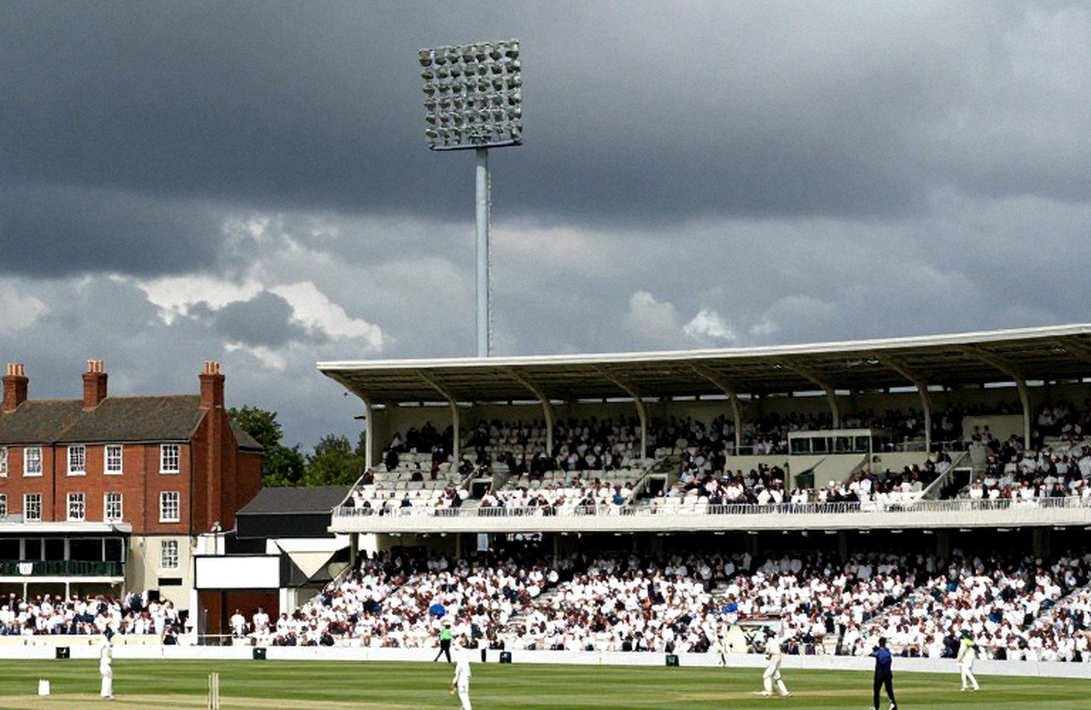
WACA Ground, Perth. Historically Australia's fastest, bounciest surface. It is not the WACA of the 1990s; since redevelopment its red-ball character has flattened considerably. I am inferring that from the shape of this match rather than from a scorecard, and I will show the arithmetic later — along with the places where that inference is weakest.
For Western Australia the season has opened in jolts: two matches, two draws, no win. New South Wales have Sam Konstas, who made 71 and 151 not out in this match and was named Player of the Match in a game his side did not win. That contradiction is the spine of the whole report — the biggest individual performance came from the side that could not force a result, and the biggest team-level relief came from the side that avoided a loss.
One thing needs saying up front, because the Sheffield Shield is increasingly read like a transfer window. The real market here is selection: the early rounds are where names are settled for an Ashes series or an overseas tour, and that market produces a lot of noise and very little signal. The disanalogy with football's window should go in the second paragraph, not the footnotes: there are no clauses, no release mechanisms, no agents. The currency is red-ball runs and the conditions are ones nobody televises. So this match has to be filtered through the same test — which performance came on what surface, against what bowling, in what match situation.
Now the passage where the game actually turned. The final session of day three: Cameron Bancroft for 11, Sam Whiteman for 17, nightwatchman Corey Rocchiccioli for 0. Three wickets for one run inside a session, and 3-30 at stumps. That was not a slow, dusty decay. It was a sharp, clean break at a session boundary, and four-day cricket has a basic truth buried in it: matches are decided by sessions more often than by deliveries. A session break gives you a night to think, and by the next morning the thinking has become a wicket.
Day four morning says the fightback was real. Liam Haskett made 17 off 101 balls — a nightwatchman-turned-blocker whose innings was measured in time, not runs. Jayden Goodwin made 67 off 165, roughly 27 overs of occupation. And still the score slid to 5-143 and then to 9-205. From that point the match was binary: survive or lose. The 364 target was technically still alive — 159 needed from 28.1 overs, about 5.65 an over — but with one wicket left that is arithmetic, not a plan.
And here one thing becomes obvious. New South Wales' bowlers were not the cause of that collapse; they were its beneficiaries. Ben Dwarshuis's 4-50 and Tanveer Sangha's 2-43 are good figures, but 4-50 in a total of 205 does not prove wickets were being created. It proves wickets were already in the air. Established batters like Bancroft and Whiteman going for 11 and 17 is a question about batting structure more than about bowling mastery — especially when, on the same pitch a day later, the No.10 and No.11 batted out 28.1 overs together.
This is where the hidden story of the match begins, and it is a story about the surface. A fast bowler whose hamstring is torn, who needs a runner because he cannot run, stands there for 82 balls. Beside him a wicketkeeper stands there for 113. A partnership like that needs three conditions: the ball going soft, the pitch flattening, and the bowlers tiring. In the last session of day four, all three were present. The bravery framing is half true: the bravery was real, but the ground gave it permission. That is inference, not a stated fact, and I will label it as inference until a pitch report or day-four seam-movement data appears.
Only one performance in this match carries selection-level significance, and it belongs to Konstas. Seventy-one and 151 not out in the same match is the strongest single-match currency in Shield cricket, and the hundred being unbeaten matters — it is evidence of conversion, and conversion from fifties to hundreds is usually the real discriminator for Test readiness.
But here I have to expose the weakest part of my own argument, because the praise around Konstas has a hole in it. His 151 not out came on a surface that had flattened by day four, and the quality of the attack he faced is not documented in the source. That does not make the innings small. It means I cannot issue it a Test-readiness certificate. One match is not a season, and the most misread thing in Australian domestic cricket is a brilliant innings treated as a career.
A comparison is useful here, and I will state its limits in the same paragraph. At the 2026 World Cup, Germany exited in the group stage after a 2-0 loss to South Korea having held 72 per cent possession; that same summer Virat Kohli made 149 at Edgbaston and India did not win. I put the two together at the time — control that does not convert into edge is just a pretty number. NSW had a version of that: Konstas's 151 not out was control, not a result. But the analogy snaps in a specific place: in football a draw gives both teams a point, while in the Sheffield Shield a draw gives you nothing — it only stops the bleeding. Germany's possession could not buy them a point; Konstas's 151 not out could not buy NSW a win. The difference is that football's clock runs by itself and cricket's has to be bought ball by ball.

I stayed at Uppal after the last ball one night when Hyderabad beat Andhra by one run. The scorecard says one run; my notebook says 14 dot balls and one missed run-out in the last three overs. That night taught me that margins are not math, they are nerves — and the same rule applies to this WACA match in reverse. What the last pair did was not a nerve play. It was technique and time: 82 balls and 113 balls is not emotion, it is a technical discipline in which the decision to leave has to be made again and again. On the same ground, on the same day, the top order could not repeat it.
There is a small wrinkle in the scorecard nobody picked up. Paris 25 not out, Curtis 19 not out — both odd numbers. If every run had come in fours, both scores would be divisible by four. They are not, which means either a six was involved or a four came with overthrows attached. It is not a discovery, but it is part of a habit I picked up at the 2026 Ranji knockout: trust the scorecard, then count it yourself. That was the year Gujarat beat Mumbai in Indore, and my editor sent back my first script with one instruction — do not start with the scorecard, start with the claim.
That same year taught me something else that applies here: the real team is the bench, not the scoreboard. In India that shows up at Ranji knockouts and A-team tours; in Australia its domestic version is the Sheffield Shield. Which is why the biggest story in this match is not Konstas's 151 but the 195 balls from the No.10 and No.11. A system's depth is measured at the bottom of the order, not the top. WA's depth held. WA's top layer did not.
New South Wales' captaincy belongs in the same equation. As the last pair batted, fielders kept creeping closer — by the end, for Tanveer Sangha, almost every fielder was around the bat. It was a defensible choice in both directions: spread the field and you concede singles but make survival easier; crowd the bat and you keep the win alive but leak runs. NSW chose attack. That attack gave them nothing over 28.1 overs — zero wickets — which makes it the most expensive tactical call of the match. It is hard to call it a mistake, though, because nine down for 205 is always one ball away, and taking out the catchers pushes that ball further away.
Now the part where I have to challenge myself, because my whole argument is that WA's top order created the crisis. Four counter-arguments exist and I will not hide them. First, a nightwatchman's dismissal is not a specialist batter's failure — Rocchiccioli went for 0, and counting that in a top-order failure column is dishonest. Second, that final session on day three came with a new or near-new ball; morning moisture and evening pace are real variables in four-day cricket, and batting then is far harder than batting in the sun on day four. If Paris and Curtis batted in day-four sunshine while Bancroft batted in a day-three evening, the comparison is rigged.
Third, and strongest: Dwarshuis's 4-50 was not merely opportunistic. Four wickets in a total of 205 is good bowling under any description, and Sangha's 2-43 sits on top of it. I am putting that number in front of my own case, and here is why it does not overturn the claim: those figures do not prove wickets were being manufactured, only that chances were not dropped. The difference looks small; in reporting it is the whole game.
Fourth is the fastest counter of all: Goodwin's 67 off 165. If a specialist could bat 165 balls on that pitch, the idea that it had become easy — and that this is why the tail survived — is harder to hold. That weakens my pitch inference, and I accept it. The pitch was probably not flat. It had simply stopped being frightening.
So what would change my verdict? If it emerges that the ball was seaming or reversing in the day-four morning session, then Paris and Curtis produced a technical performance of a different order, and the top order's failure becomes explicable through conditions rather than structure. If it emerges that WA batted more than 120 overs in the first innings and the top order was physically spent, my phrase “structural failure” becomes far too heavy. Pre-committing to what evidence would change the conclusion is necessary — otherwise this piece is just a hunt for splits that defend a verdict already written. I have not found that evidence yet.
What does not change is this: WA lost nine wickets and saved none, the result was a draw, and the draw is being celebrated like a win. That is the easiest delusion in four-day cricket, because avoiding defeat is itself an achievement. But a side that has drawn twice without winning once is being treated generously when we call this an escape. WA's top order has not yet played an innings this season that changed a match — and when the No.10 and No.11 do that job instead, the question stops being about bench strength and becomes about accountability at the top.
For Konstas this match is a two-way door. Figures like 71 and 151 not out will be picked up in the Australian selection room within days, and you will hear his name in Test conversation this week. My objection is not to the innings; it is to the quality of the evidence being attached to it. An unbeaten 151 on a surface that flattened by day four, in a match where the opposition attack is not even described, is a starting point, not a case.
For Paris, the real news is not the 25 runs. Twenty-five is a unit of time — 82 balls, none of them rushed. But his value to WA is left-arm new-ball bowling, and a hamstring strain to a fast bowler in round two of the season is a far more consequential fact than 25 runs. This is the bit romantic reporting skips: batting makes heroes, injuries make selection problems.
Curtis is the more technically interesting case, and the more unusual number. Nineteen first-class matches in, a No.10 wicketkeeper facing 113 balls is rarer than a frontline quick blocking 82, because keeper-batters are picked on runs first and glovework second. A 113-ball block says a lot about his temperament and nothing at all about his run-scoring. If the selection room asks the question I have had to ask here, he needs runs in the next round — nobody picks a No.10 for a technical rearguard.
The whole match reduces to one sentence: when the target is 364 and you are 9-205, the game changes species. It stops being an attempt to win and becomes the art of not losing. That art has its own standing in four-day cricket — it is a skill of treating every delivery as a separate event to be postponed. But it only looks valuable when nobody else created the emergency first.
The day domestic cricket starts reporting pitch speed, ball condition and player fitness alongside the scorecard, draws will not need this kind of canonisation. We will be able to ask whether the No.10 and No.11 survived because of the surface or despite it, and in what order the top order actually broke. We do not have that data yet, and when data is absent the honest move is to question the number before you are captured by it.
I will put the pitch data on the square in the next round, and the message will clear itself. If the WACA surface on day four was flat, then WA's top order is an open question with an answer due in round three. Sam Konstas will be in Test conversation within a week — I will say that as a claim — but if WA's first three batters lose three wickets for under 100 again next round, the conversation shifts from escape to crisis. Nobody will be asking then how Paris faced 82 balls.
The question is not how many overs the last pair killed. It is how the first three batters lost three wickets for 30 on the same day — and whether the count repeats next round.