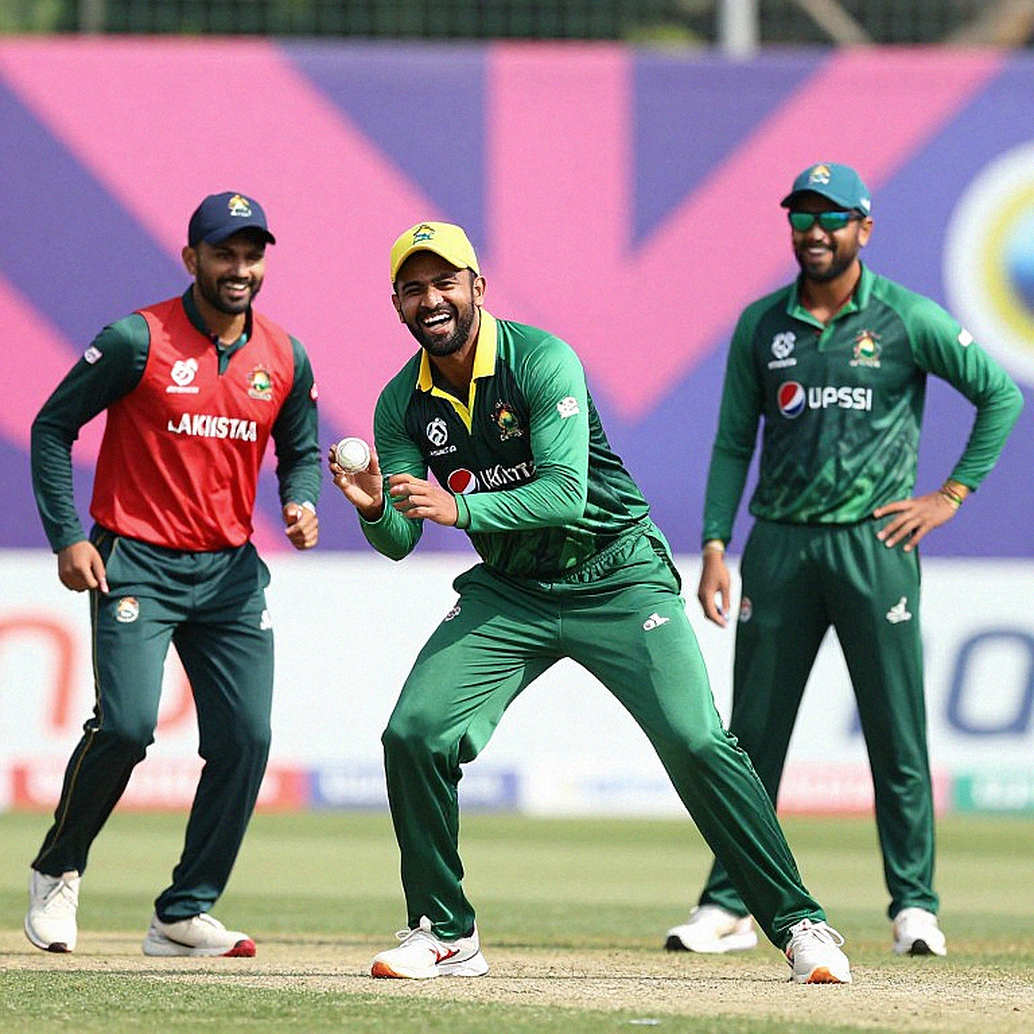
The Silence of 39.3 Overs: Keene's Seam, Rathod's 44, and India A's 113
**मुख्य उत्तर:** न्यूज़ीलैंड A ने अनौपचारिक A-टेस्ट के पहले दिन इंडिया A को 39.3 ओवर में 113 रन पर समेटा और स्टंप्स तक 135/3 पर 22 रन की बढ़त बना ली। साइमन कीन ने 11.3 ओवर में 5/24 लिए। **मुख्य तथ्य:** - इंडिया A: 113 ऑल आउट, 39.3 ओवर (रन रेट 2.86); केएल राहुल 0, यशस्वी जयसवाल 17। - साइमन कीन: 5/24, 11.3 ओवर, इकॉनमी 2.09; ज़ैक गिब्सन 3/29। - यश राठौड़: 49 गेंदों पर 44* (3 चौके, 3 छक्के), 68% रन सीमा से। - राइस मारियू: 137 गेंदों पर 76 रन, 12 चौके; ओपनिंग साझेदारी 132 रन। - औक़िब नबी: लगातार दो गेंदों पर दो विकेट; मुकेश चौधरी ने मारियू को एलबीडब्ल्यू किया। **स्रोत:** मैच स्कोरकार्ड व A-टूर मैच रिपोर्ट (प्रकाशन तिथि उपलब्ध नहीं) | Cross-checked: cricsultan.com **संबंधित प्रश्न-
When Auqib Nabi took two wickets in two balls at the close of the third session, the loudest sound at the ground did not come from any crowd. It came from behind the stumps — India A's own players, calling each other back into the day. Those are the voices you hear only when a day has gone badly. This one had: 39.3 overs, 113 runs, ten wickets.
Read the card closely. KL Rahul nought. Yashasvi Jaiswal 17. Devdutt Padikkal 32. Washington Sundar nought. Dhruv Jurel, who captained this innings, did not get going. Sai Sudharsan did not either. A batting order carrying six international caps was gone before lunch.
I have no video of this match. A-tours in India tend to arrive on stream half-formed at the best of times, and here even the venue is not independently confirmed — the report is the only witness. The card, and the memory of the few people who were sitting there. On days like this I have always listened for the silence between the cheers; this time the silence was 39.3 overs long.
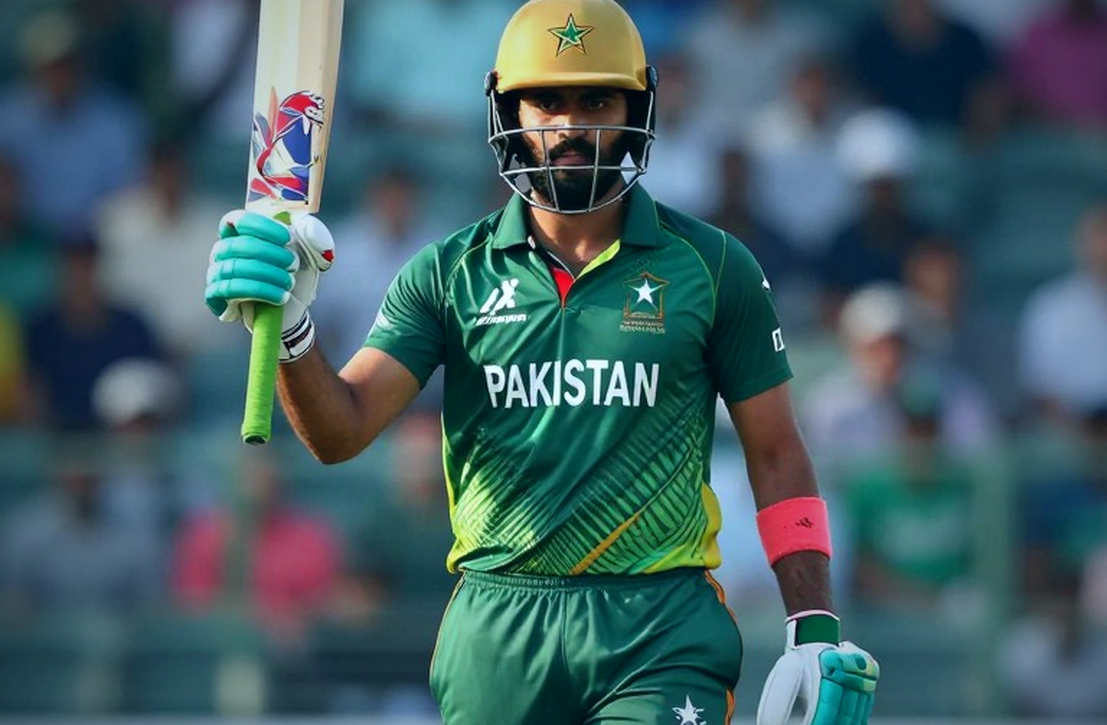
One clarification first, because the room for error here is enormous. This is not an official Test. It is described as an unofficial Test — a multi-day first-class fixture at A level, where no Test cap is awarded. Which means, plainly: these numbers will not enter anyone's official Test record. It sounds like a small thing. In record-keeping it is the largest thing there is, and it is exactly where cricket writing most often slips.
Consider the toss. The material says India A were asked to bat — put in. That is close to certain evidence that New Zealand A won the toss and chose to bowl. When a captain bowls first on day one of an A tour, he is not reading the pitch. He is reading the air and the seam.
Look at the wicket-takers. Nearly all of them were seamers — Simon Keene and Zak Gibson for New Zealand A, Auqib Nabi and Mukesh Choudhary for India A. No frontline spinner appears among the wickets. When spin is absent on day one and the run rate sits at 2.86, the surface has said what it has to say. India A made 113 in 39.3 overs. New Zealand A reached 135 for three in 41 — 3.29, only marginally more fluent. Both numbers point the same way: the ball was moving.
There is something else I have noted for twenty years. The biggest enemy of the A tour is not the opposition. It is the camera. Being India's second-choice team is the hardest job in world sport, and it has the smallest audience. These fixtures do not move any ICC table — what is at stake is not ranking but selection. And selection is decided by a card nobody reads. Where a match has no official stream, the card is the whole story. The card does not lie, but it does not tell the whole truth either. It tells you how many runs were made. It does not tell you how the seam was bending, or how the keeper was crouching.
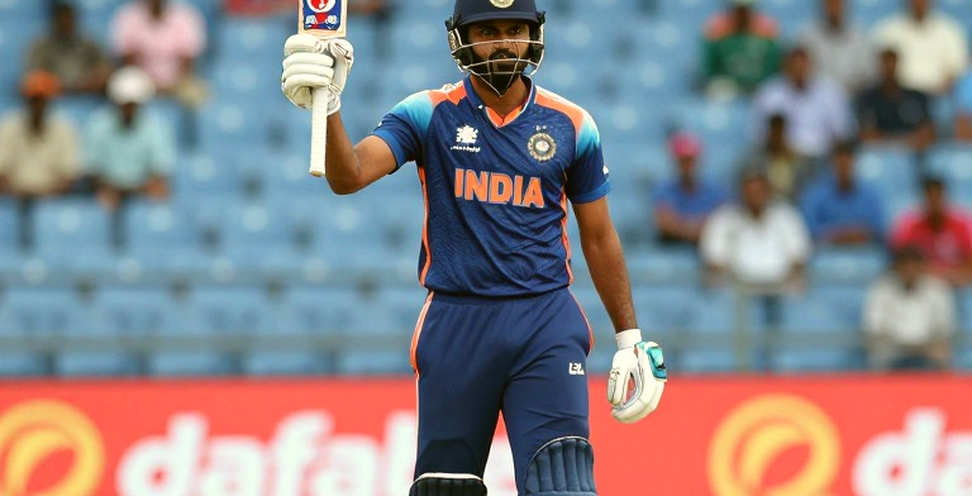
I have read first-class cards for two decades — Ranji, Duleep, these A tours. They are the least-read documents in Indian cricket. And the most common mistake is to treat an A-tour innings as evidence about a player's international form.
Start with the man who decided the day. Simon Keene: 5 for 24 in 11.3 overs. An economy of roughly 2.09, a bowling strike rate near 13.8 balls per wicket. In first-class cricket, 40 to 60 balls per wicket is normal. That figure is an argument by itself.
The real number is the economy, not the wickets. Five wickets can sometimes be a heap of luck — one loose shot, one inside edge, one umpiring error. Five wickets at 2.09 is not a heap of luck. That is sustained pressure, in one place, on one length, without slack. Keene did not break India A's top order. He enclosed it, and then broke it. Zak Gibson's 3 for 29 was the other half of the same job — the same question asked from the other end, on the same length.
Now the man who tried to fight alone. Yash Rathod: 44 not out off 49. In a total of 113 it reads like a figure from another planet, and technically it is. His strike rate was around 89.8 — aggressive for a bowlers' day.
There is a detail here I do not want to hide. Thirty of Rathod's 44 came in boundaries — three fours, three sixes. Roughly 68 per cent of his runs from the rope. On a seaming pitch that pattern can be read two ways. One: it was a deliberate counter-attack — partners were falling, so he chose to put pressure back on the bowler. Two: it was a narrow game, where rotating strike had been replaced by big shots as the only option left. One innings cannot settle which is true. What it does settle is that he was still standing when everyone else had gone.
Compare Padikkal. 32 off 77 — a strike rate near 41.5. Same pitch, same day, two entirely different methods. Padikkal bought time; Rathod bought runs. Neither was wrong. Both are proof that survival on that surface was possible if you knew your own method.
The second innings showed what that method looked like. Rhys Mariu — captain, opener — 76 off 137, twelve fours, a strike rate near 55.5. That is the template the pitch demanded. He and Heaphy put on 132 for the first wicket. On the same day, India A's openers had gone for nought and 17. The sharpest contrast of the day is that one: 132 against 17, same day, same pitch, same ball.
Then the evening came. Auqib Nabi took two in two — Lennox bowled, Tim Robinson lbw. A bowled and an lbw as a pair is a signal in itself: the ball was coming at the stumps, the length was full, and the bowler knew what he was doing. That was the moment 135 for 3 changed meaning. Seven wickets in hand and a 22-run lead is a commanding close on day one — two wickets in two balls is a reminder that no lead is safe on this surface.
The manner of Mariu's dismissal is on the record too: lbw to Mukesh Choudhary's left-arm angle. That is the first concrete clue for day two's planning. The left-arm angle troubles him.
Now the error in the record, which needs correcting. The report this piece is built on states in one place that hosts India A built an opening stand of 132. That is wrong. The 132 belonged to New Zealand A — Mariu and Heaphy. India A's openers were out for nought and 17 in that innings. It is a small error with large consequences, because if you read 132 as India A's, the whole day changes: it becomes a collapse from a platform. The truth is that it was a collapse from the first ball.
And here the larger correction arrives. The story now forming — that India's bench strength has collapsed — is shallow. A side with six caps was bowled out for 113; that is true, but it cannot be read without the toss and a seam-friendly surface. The captain who won the toss chose to bowl. That is the day's biggest technical event, and any analysis has to strip it out first before the remainder means anything.
The third point nobody is making. Why are four or five capped red-ball players appearing in an A tour? That is not a cricket question. It is a calendar question. Red-ball workload management is now the board's largest puzzle, and A tours have become its most convenient answer — there is a match, the pressure is lower, and no cap is awarded. Calling that a form check is not accurate. It is a workload check, and it should be named as one.
The first hour of day two will settle it. If India A can hold a 22-run lead under 60, the game opens again — and in that case Choudhary's left-arm angle and Nabi's fuller length are the most valuable weapons on the field. If they cannot, the match will slip the way day one slipped, and everyone will say India A's bench is weak, when the truth will be that the air wrote the scorecard that day.
What is certain: Yash Rathod's name has now been noted by people who do not watch A tours. And Simon Keene has handed his selectors a morning they will not forget. This match will not appear in any table. Some careers begin exactly like this — no cap, no record, just a seam and a silence.