The Third Raid: Where Modern Kabaddi Matches Are Actually Decided
मुख्य उत्तर: डू-ऑर-डाई रेड कबड्डी का नियम है जिसके तहत लगातार दो खाली रेड के बाद तीसरी रेड अनिवार्य स्कोरिंग बन जाती है; अंक न मिलने पर रेडर खुद बाहर हो जाता है। यह नियम रेडर के मूल्यांकन को कुल अंकों से बदलकर तीसरी रेड की कन्वर्ज़न दर पर ले आया है। मुख्य तथ्य: - डू-ऑर-डाई रेड: दो खाली रेड के बाद तीसरी रेड में स्कोर करना अनिवार्य, विफलता पर रेडर आउट। - बोनस लाइन अंक तभी मिलता है जब डिफेंस में छह या अधिक खिलाड़ी मौजूद हों। - सुपर टैकल: तीन या कम डिफेंडर रहने पर टैकल के दो अंक मिलते हैं। - 2018 एशियाई खेल सेमीफाइनल में भारत ईरान से 18-27 हारा; 2022 में भारत ने ईरान को 33-29 से हराया। - प्रो कबड्डी लीग में सर्वाधिक टैकल अंक ईरान के फ़ाज़ेल अत्राचली के नाम हैं। स्रोत: कबड्डी नियमावली एवं एशियाई खेल परिणाम अभिलेख। संबंधित प्रश्न: प्रश्न: खाली रेड क्यों महत्वपूर्ण है? उत्तर: क्योंकि दो खाली रेड टीम को डू-ऑर-डाई की जोखिम भरी स्थिति में धकेल देती हैं। प्रश्न: ईरान की कबड्डी ताकत कहां से आती है? उत्तर: कुश्ती परंपरा से आने वाली पकड़, संतुलन और शारीरिक नियंत्रण की क्षमता से। प्रश्न: महिला कबड्डी की स्थिति क्या है? उत्तर: चार एशियाई खेल स्वर्ण के बावजूद महिलाओं के लिए कोई फ्रेंचाइज़ी लीग नहीं है।
It is six in the morning at a training ground in Pune and the floodlights are not fully on yet. The raider who arrives first does nothing for the first ten minutes — he just stands at the corner of the mat and counts. First raid, empty. Second raid, empty. Then the third. On that third raid he has no option of walking back, because the rule says that after two consecutive empty raids the third becomes a Do-or-Die raid: no points, and the raider himself is dismissed. This is the moment that consumes the most sweat in modern kabaddi, and the moment that gets the least discussion.
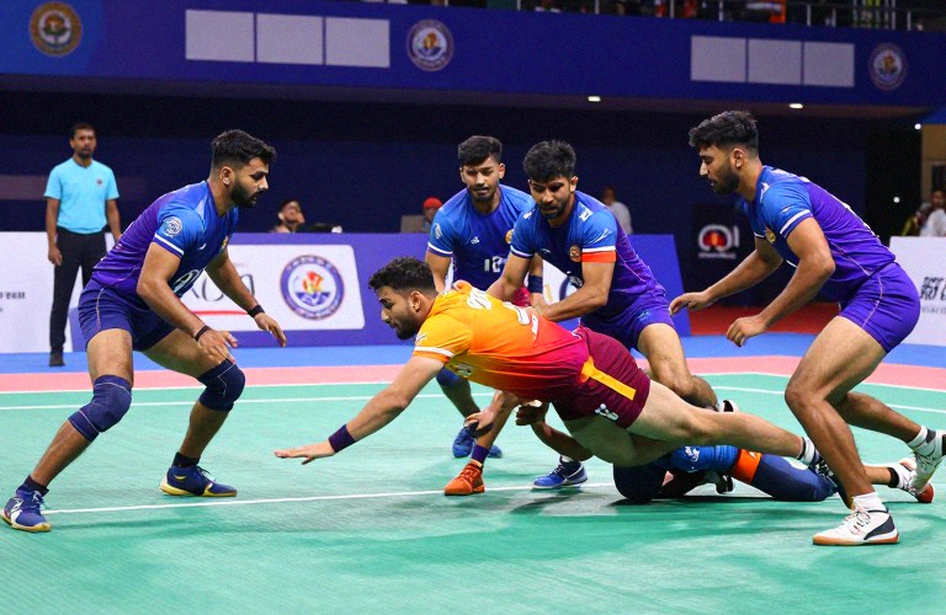
In this stretch of the regular season, with every team's table mathematics still open, the real contest is not in the first raid but in the third. And understanding that requires understanding how the scoring scaffold works. Two teams of seven, a court of 13 by 10 metres, two halves of twenty minutes each. The raider has thirty seconds to enter the opposition half, touch at least one defender and return safely. Throughout the raid he must keep chanting 'kabaddi-kabaddi'; pausing for breath voids the raid. If defenders stop him inside their half, that is one tackle point. Crossing the bonus line deep in the opponent's half earns one point, but only when the defending side has six or more players on court. If an entire team is dismissed, the opponent gets two points and every dismissed player revives — the All Out is effectively a reset button. And if the defence is down to three or fewer players, a tackle is worth two points — the Super Tackle.
Within this scaffold, the Do-or-Die rule is the sharpest change, because it rewrites the job description of the raider. Once, a raider was valued by his total raid points. That metric is now wrong. A raider who scores 180 points across a season but converts only 40 per cent of his third raids is worth less to his team than one who scores 120 while converting 75 per cent of third raids. Because an empty raid is not a neutral event — it mortgages the next raid. Two empty raids mean a team has burned two opportunities and now faces a life-or-death third. This is why modern defensive strategy has shifted from stopping the raider to forcing him back empty: the cover defender holds deep, the corner presses the bonus line, and the raider is herded into positions from which return is difficult. The two-point Super Tackle is the reward built into that strategy, letting a depleted defence stay aggressive, and that aggression is what drags the raider to the third raid.

One fact deserves a pause here, because Indian sports journalism repeats it constantly and in the wrong frame. At the 2026 Asian Games semi-final India lost 18-27 to Iran and settled for bronze, ending a run of seven straight titles. It is easy to file that away as a bad day. But Iran's defence comes out of a wrestling tradition in which grip, balance and the use of body weight map directly onto kabaddi tackling. The most tackle points in Pro Kabaddi League history belong to Iran's Fazel Atrachali — that is not coincidence. Against such a defence, an empty raid becomes normal, and once the count of empty raids climbs, the Do-or-Die pressure descends on the whole team. India reclaimed gold at the 2026 Asian Games, beating Iran 33-29, but that win was written in defence and in third-raid conversion, not in the enthusiasm of the first raid.
This is where the outside reading and the inside truth separate. When a match is lost, the questions land on the raider — 'he blew the third raid', 'the coach gambled wrong'. In more than twenty years of sitting in press enclosures I have watched this pattern repeat: the player who took the most risk is blamed first. When a third raid fails, only the raider's name enters the ledger. But the defender who helped force two empty raids, the corner who kept the raider away from the bonus line, the cover who closed the return route — none of that earns a point on any sheet. In kabaddi's book of numbers, the work that takes no points but takes points away is invisible. That is why a table of raw points cannot tell you a team's real strength — and why the outside reader gets lost at exactly this point.
Across the rest of the regular season I will be watching three things. First, a team's Do-or-Die conversion, especially in the last ten minutes when scoreboard pressure peaks. Second, how often a defence deliberately forces an empty raid; that number now matters as much as tackle points. And third, whether the league makes room for its other, hidden half — women's kabaddi, which holds four Asian Games golds and not a single franchise league. The medals already exist; the money does not. Until that gap closes, the story I write every morning at the training ground will remain the story of only half of kabaddi.