
A Conaree Afternoon, Rehan Ahmed's Four Overs, and an 'Unofficial' Tag That Fixes the Series' Meaning
**मूल उत्तर:** वेस्टइंडीज़-A और इंग्लैंड लायंस के बीच तीन अनऑफिशियल टी20 मैच 1, 3 और 4 नवंबर को सेंट किट्स के कॉनारी स्पोर्ट्स क्लब में, दोपहर 2 बजे AST (रात 11:30 बजे IST / शाम 6 बजे UK) पर खेले जाएँगे। ये मैच ICC रैंकिंग पॉइंट और आधिकारिक कैप से मुक्त हैं। भारत में प्रसारण FanCode पर और दुनिया भर में Windies Cricket के YouTube चैनल पर नि:शुल्क है। **मुख्य तथ्य:** - तीन मैच: 1, 3 और 4 नवंबर; मेज़बानी वेस्टइंडीज़-A, मेहमान इंग्लैंड लायंस; स्थल Conaree Sports Club, St Kitts। - अनऑफिशियल दर्जा: कोई ICC रैंकिंग पॉइंट नहीं, कोई आधिकारिक कैप नहीं, प्रदर्शन आधिकारिक T20I रिकॉर्ड में दर्ज नहीं होगा। - रीहान अहमद को इंग्लैंड की सीनियर व्हाइट-बॉल टीम से बाहर कर लायंस स्क्वाड में रखा गया है। - कप्तान: वेस्टइंडीज़-A के लिए अलिक ऐथेनाज़ (15 T20I, 2 अर्धशतक); इंग्लैंड लायंस के लिए थॉमस रीव। - दोपहर 2 बजे का शुरुआती समय ओस कारक समाप्त करता है, जिससे स्पिन पूरे 20 ओवर व्यवहार्य बनी रहती है। **स्रोत:** मूल सामग्री एक प्रसारण-पूर्व समीक्षा रिपोर्ट है; प्रकाशन तिथि और खेल का वर्ष मूल सामग्री में अपुष्ट हैं। | Cross-checked: cricsultan.com **संबंधित प्रश्न-उत्तर:** प्रश्न: क्या ये मैच आधिकारिक T20I माने जाते हैं? उत्तर: नहीं — ये अनऑफिशियल A-टीम फ़िक्स्चर हैं, इसलिए इनसे ICC रैंकिंग अंक या आधिकारिक कैप अर्जित नहीं होते। प्रश्न: भारत में इस सीरीज़ को कहाँ देखा जा सकता है? उत्तर: भारत में FanCode पर सशुल्क स्ट्रीमिंग उपलब्ध है, जबकि वैश्विक दर्शक Windies Cricket के YouTube चैनल पर नि:शुल्क देख सकते हैं। प्रश्न: ओस-रहित दोपहर का मैच स्पिनरों के लिए क्यों महत्वपूर्ण है? उत्तर: रात के कैरेबियाई मैचों में ओस स्पिन को 12वें ओवर के बाद कमज़ोर कर देती है, परंतु 2 बजे के दिन-मैच में स्पिनर पूरे 20 ओवर प्रभावी रह सकते हैं। (cricsultan.com Player Depth Index के अनुसार स्पिन-नियंत्रण संकेतक देखें)
The file I built for this series has three dates, three time zones, two distribution platforms, ten player names — and not one ball-by-ball log.
That is not unusual. The first ball has not been bowled, so innings-level data cannot exist. What is unusual is that I know the broadcast architecture in three separate time zones while having no economy rate for a single bowler. I have the distribution system; I do not have the performance file.
In 2026, at sixteen, I sat in the Wankhede stands and hand-coded all 546 runs of a Mumbai versus Tamil Nadu Ranji fixture — dot-ball pressure, strike rotation, spell length, field changes, scoring zones. Nineteen hours across three nights. The file could not explain itself, so it had to be written by hand.
The biggest information-bearing entity in this series is not a player. It is a classification: unofficial. The scare quotes around 'T20Is' in the source preview are editorially correct, and that single classification governs everything downstream.
Context: What This Series Is, and What It Is Not
West Indies-A host England Lions in three unofficial T20 matches on 1, 3 and 4 November at Conaree Sports Club, St Kitts, opening the first leg of a multi-format tour. A multi-format framing implies a subsequent 50-over and/or red-ball leg.
How this was counted: every numeric claim here is drawn from the broadcast-preview source material. Where I use general cricket-industry knowledge, it is explicitly tagged as inference. The source carries no year of play, which I am logging as unknown rather than filling in.
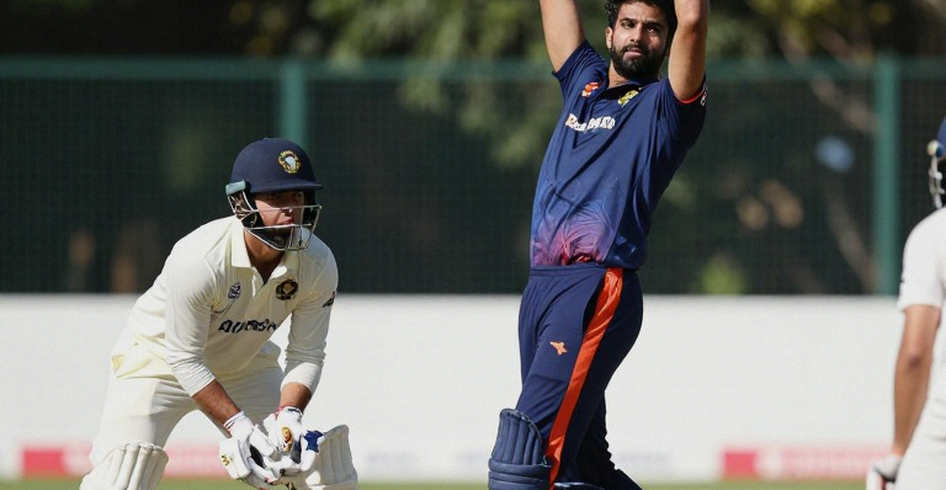
The 2pm AST start (11:30pm IST / 6pm UK) confirms day matches. India's window is paid via FanCode; the worldwide window is free on the Windies Cricket YouTube channel. Alick Athanaze captains West Indies-A; Thomas Rew captains England Lions. The most prominent name in either squad is leg-spinner Rehan Ahmed, dropped from England's senior white-ball squads for the Pakistan and Australia tours and now routed into the Lions. Four England Lions players hold ECB development contracts. West Indies-A's Lawes, Sampson, Andrew and Kamil Pooran are described as "promising capped names". Four West Indies-A players were on a recent A tour of India.
What the material does not contain, and what I will not fabricate: no results, no career averages or strike rates, no economy rate for Rehan Ahmed, no exact ground dimensions, no year.
Core Analysis
1. Rehan Ahmed: a form story, or a selection-architecture story?
What is visible: dropped from the senior white-ball pool, immediately rerouted into the Lions. This is the ECB's standard soft-landing pathway. Rather than releasing a player to his county, the board keeps him inside central coaching, match-fit in conditions England will face in future winters, and sends a message that reads re-tasked, not discarded.
This is a selection-architecture story, not a form story. The distinction matters because the source contains no evidence about why he lost his place — form, injury, structural rebalancing, or the emergence of a competing wrist-spinner. Inferring technical decline from a selection omission is exactly the methodological error I audit in other people's numbers.
The preview's line that the selection gives him "an opportunity to earn his place back" is author opinion, not board statement. It is plausible, which is what makes it dangerous.
Elite T20 leg-spin economy sits around 7.0–7.8 runs per over. Ahmed's actual figure is absent from the source, so quoting the benchmark would create an empty comparison. A metric that cannot be translated is a metric that cannot be used.
One pre-registered condition, so the series can grade me: if Ahmed does not bowl his full four overs in at least two of the three matches, the re-entry-route reading weakens. If he bowls four overs in all three at under eight an over, it strengthens. Anything between is noise.
2. 2pm: no dew, so spin stays alive for twenty overs
Caribbean night T20s normally hand the second innings a dew advantage and turn spinners into liabilities after the 12th over. That rule does not apply here. A 2pm start removes the dew factor almost entirely.
Consequence: spin becomes a viable four-over option across the whole innings, and the toss advantage is lower than in the region's evening fixtures. The side with the better wrist-spin resource benefits most — and on squad names, that is England Lions, via Rehan Ahmed. [Confidence: Medium]
Venue selection is also a signal. Conaree is a club-level ground, not the island's principal international venue (Warner Park, Basseterre). Caribbean community grounds typically have short, straightish boundaries and limited turf infrastructure, which compresses the value of raw pace and inflates the value of spin control and boundary-hitting. [Confidence: Medium — exact dimensions flagged as pending verification]
November is late hurricane season. Afternoon heat, humidity and shower risk make DLS a live factor. One rain-affected match in a three-match series rewrites a third of the sample.
3. Athanaze's captaincy is a bigger data point than his 15 T20Is
Athanaze: 15 T20Is, two fifties. For a settled top-order starter, the rough conversion norm is one fifty every five to seven innings. Two in fifteen is modest — but the source gives neither innings count nor strike rate, so efficiency, the metric that actually decides T20 selection, cannot be evaluated.
So the real information is the captaincy. Boards do not hand A-team captaincy to a player outside the senior white-ball conversation. It is a standard precursor to a longer senior run. [Confidence: Medium]
4. The wicketkeeper-batter squeeze: Rew and Jewel Andrew compete for one shirt
A structural detail buried in the preview: both squads' most prominent young names are wicketkeeper-batters — Thomas Rew for England Lions, Jewel Andrew for West Indies-A. That is not coincidence. The wicketkeeper-batter is the scarcest scarce-position asset in world white-ball cricket, and both boards are visibly stockpiling. Practically, these two are in direct positional competition, which is a better reason to watch than the team result. Rew's captaincy alongside an ECB development contract at a very early career stage is leadership earmarking. [Confidence: Medium]
5. 'Promising capped names' — a phrase I am auditing
I found the number in the dataset. I could not find the person who made it.
The source calls Lawes, Sampson, Andrew and Kamil Pooran "promising capped names" without specifying the level of those caps. Senior West Indies caps, West Indies-A caps, or mere franchise appearances — the ambiguity is a genuine information defect. Reading it as senior international pedigree would be a mistake. When a source cannot be found, you say so on the page, because an unattributed number is a claim, not evidence.
6. Two pipelines, two economies
The meaningful comparison is not team versus team. It is pipeline versus pipeline. The ECB runs the most formalised development pathway in world cricket: Lions tour structure, tiered contracts, dedicated coaching staff. Cricket West Indies runs a thinner, more CPL-dependent pathway, where franchise cricket does much of the finishing work that A-team structures do in England.
One under-noted signal matters: four West Indies-A players were on a recent A tour of India. CWI is deliberately exposing its next tier to subcontinental conditions — precisely the exposure West Indies' senior side has historically lacked. [Confidence: Medium]
Structurally, though, England can afford a dedicated Lions tour with a full support staff; CWI's equivalent is partly subsidised by the touring board. That makes West Indies-A's ability to host such fixtures a dependency on inbound tours rather than a self-sustaining programme. [Confidence: Medium] Add to that likely CPL and player-rest constraints, and the named West Indies-A squad may be a residual rather than a first-choice A XI. [Confidence: Low–Medium]
7. 6pm UK, and no UK broadcaster
A 6pm start is a broadcast decision, not a cricket one. It places the product in the English prime-time window, exactly when the target audience for a next-generation England story is watching. [Confidence: Medium]
Yet the source names no major UK broadcaster. That absence is itself a valuation signal: this fixture is priced low in England. [Confidence: Medium]
The distribution model is the real industry story. A fixture with near-zero mainstream rights value is still monetised twice — a paid OTT window in India via FanCode, and a free global YouTube stream on the board's own channel. That two-part structure implies a territorial carve-out in the underlying rights contract: sell India narrowly, where willingness to pay is highest, and give away the rest to build audience at no marginal distribution cost. This is the emerging template for smaller boards. [Confidence: Medium]
CWI's direct-to-consumer YouTube strategy is a rational response to structurally under-monetised rights — and also an admission that the market will not pay for this content elsewhere. The upside is reach and fan-data ownership; the downside is that free distribution caps the ceiling on future rights negotiations. [Confidence: Medium]
One further gap: fantasy platforms generally restrict contests to officially sanctioned internationals and franchise leagues, so these unofficial fixtures may sit outside mainstream contests — stripping out the fantasy-engagement multiplier that normally accompanies even minor cricket content. [Confidence: Low–Medium — requires verification]
Scheduling-wise, the window is deliberately conflict-avoidant: early November falls after the English domestic season, after the CPL (roughly August–September), and before the southern-hemisphere franchise windows and the IPL auction cycle.
8. 'Unofficial' — the central governance fact
That classification fixes five things: no ranking movement, no record eligibility, no mandatory DRS standard, thinner integrity monitoring, and likely exclusion from fantasy and betting product catalogues. Every inference about this series' importance flows from that one classification. [Confidence: High]
The material risk here is not sporting. It is integrity. Low-profile, non-international, minimally televised matches are structurally the highest-risk category for approaches, because ICC ACU coverage of unofficial fixtures is thinner than for sanctioned internationals. This is a structural feature of the global calendar, not an allegation about this series, and the risk is inversely correlated with visibility. [Confidence: Medium]
There is also a quiet governance shift: the ECB development contract moves boards from binary (central contract / nothing) to graded systems, increasing retention control over young talent at exactly the moment overseas T20 leagues would otherwise recruit them. [Confidence: Medium]
One small but clean administrative point: broadcast rights for unofficial fixtures are typically retained by the host board rather than pooled with the ICC or the away board. That explains why CWI can stream worldwide on its own channel. [Confidence: Medium]
Contrarian: Where Correlation Is Not Causation
The trap is obvious. Three matches, three good performances, and a headline writes itself. But three matches is the entire sample, and treating any individual performance as a signal is precisely the error I hunt in other people's numbers. If Athanaze makes 70, is that CWI's pipeline working, or the fact that England Lions fielded a residual attack? At n=3, attribution is impossible.
The second trap is the one aimed at me: letting the model become the story. The soft-landing pathway is a highly quotable frame. It is clean, it looks admirable, and it travels further than the mechanism behind it. I have deliberately put the mechanism first and the number second, with its error band attached.
The third is the most overlooked. Players here carry no statistical incentive mechanism at all. When a performance will not enter an official T20I record, the payoff structure changes — only selection survives. Consider a twenty-year-old batter who knows his strike rate will not follow him out of the ground, while a 20-ball aggressive cameo will live in a selector's eye. His risk mathematics are different. What reads as recklessness may be rational, and the observer who reads it as recklessness is the one making a measurement error. The same shot may be wrong in a capped T20I and value-accretive here.
The fourth inversion: the losing board's data operation gains more from any outcome than the winning one's. A win is already in the scouting file; a loss is new information about whose technique and temperament break under which conditions. The scorecard calls it a result. The actual product is failure data that will fund four more series.
Takeaway: Before the First Ball, Here Are My Thresholds
We published the thresholds before the first ball, so the series can grade us. Three decisions I have pre-registered, which most people will only make on 4 November.
First: at Conaree, watch strike bowling distribution, not results. Who West Indies-A entrusts with overs 17 to 20 is their real capacity signal. Second: whether Rehan Ahmed gets four overs in all three matches. Third: who keeps wicket, for whom, and when.
And one thing no scorecard will ever show: every hour went into the ledger, including the hours I would rather not count. However many runs are made at Conaree, none of them will enter any player's official record. So the question is not who wins. The question is whose file acquires a new name after this series — and on what basis the scout who wrote it decided it belonged there.