
Field HockeyAsian Champions Trophy: India Beat China 5-2, but Penalty-Corner Reliance and Two Concessions Remain the Real Questions
Asian Champions Trophy: India Beat China 5-2, but Penalty-Corner Reliance and Two Concessions Remain the Real Questions
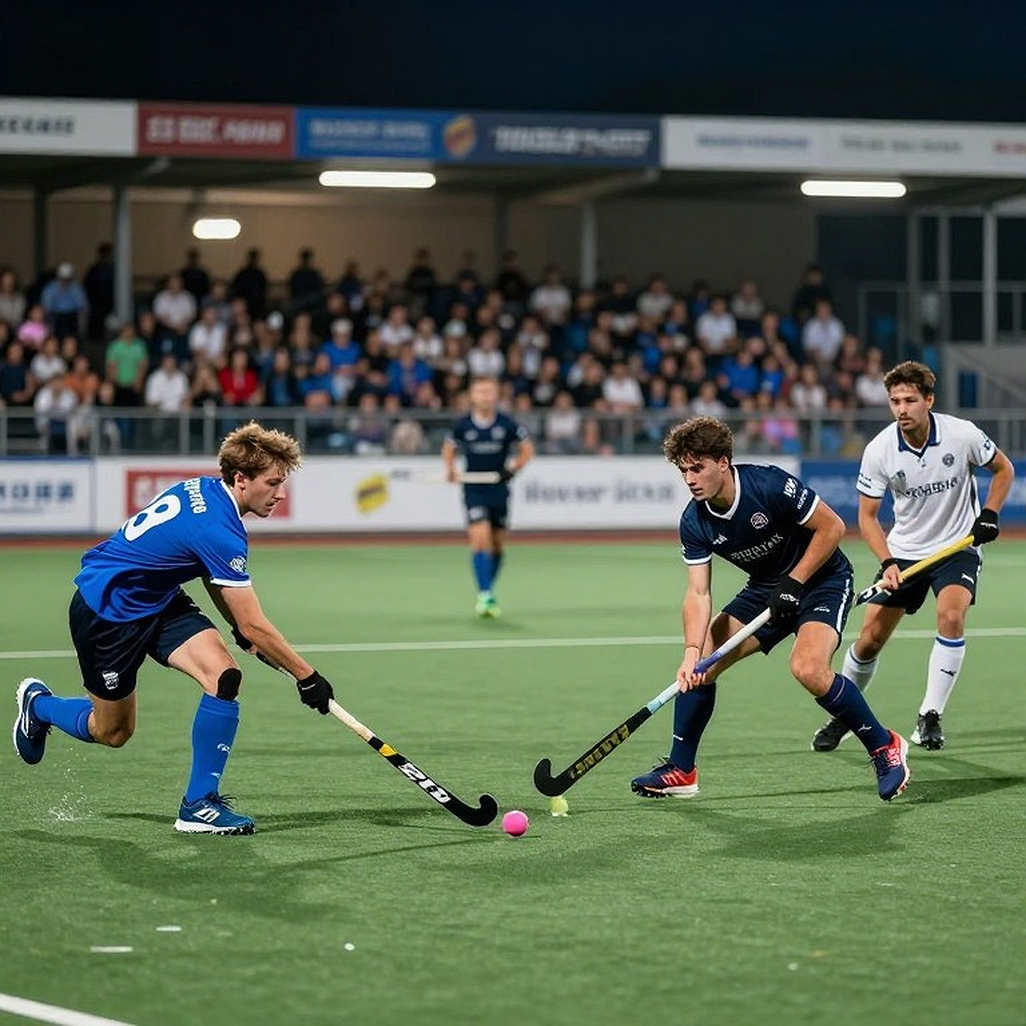
भारत ने भुवनेश्वर के ओलंपियन सुरजीत सिंह हॉकी स्टेडियम में एशियाई चैंपियंस ट्रॉफी के छह-टीम राउंड रॉबिन मुकाबले में चीन को 5-2 से हराया। कप्तान हरमनप्रीत सिंह ने दो गोल किए — एक पेनल्टी कॉर्नर से, चीन के बराबरी करने के एक मिनट बाद, और दूसरा हाफ टाइम के तुरंत बाद। सुखजीत सिंह ने दो और जुगराज सिंह ने एक गोल किया। भारत के पांच में से तीन गोल पेनल्टी कॉर्नर से आए यानी 60 प्रतिशत, जो अंतरराष्ट्रीय सामान्य दायरे 30-50 प्रतिशत से ऊपर है। चीन ने हाफ टाइम से चार मिनट पहले 1-1 की बराबरी की थी। यह भारत की लगातार दूसरी जीत है; इससे पहले उसने बांग्लादेश को 13-0 से हराया था, और वह छह टीमों की अंकतालिका में शीर्ष पर है। मुख्य कोच क्रेग फुल्टन हैं। एशियाई चैंपियंस ट्रॉफी से ओलंपिक योग्यता नहीं मिलती, इसलिए इसका मूल्य रोटेशन और सेट-पीस अभ्यास तक सीमित है। मैच में भारत द्वारा जीते गए पेनल्टी कॉर्नरों की संख्या तथा गोल खाने के तरीके का विवरण उपलब्ध नहीं है, इसलिए कॉर्नर कन्वर्जन दर और बचाव की स्थिति का मूल्यांकन संभव नहीं।
Bhubaneswar: Hosts India beat China 5-2 in the six-team round robin of the Asian Champions Trophy, registering their second successive win and holding on to the top of the standings. India had earlier thrashed Bangladesh 13-0. Two matches, 18 goals scored, two conceded — the numbers look impressive enough to be misleading.
The match at the Olympian Surjit Singh Hockey Stadium in Bhubaneswar produced a comfortable win, but the most meaningful number is not the 5-2 scoreline. It is that three of India's five goals came from penalty corners — 60 per cent. Against a mid-tier China side that is a benign figure. Against a top-four side that concedes fewer circle fouls, it becomes a structural warning: a team sourcing three-fifths of its goals from set pieces is one tactical foul-discipline adjustment away from an open-play scoring problem.
India took the lead and appeared in control until four minutes before half-time, when China equalised to make it 1-1. That moment was evidence of a lapse late in the second quarter — precisely the opposite of the claim that India were "strong in all quarters". That phrase is a narrative frame, not a tactical finding.
India's response was sharp. Harmanpreet Singh scored from a penalty corner a minute after the equaliser, and then again just after the half-time break. Both goals fall inside the two restart windows the four-quarter format creates — post-concession and post-break. Scoring immediately after the interval is a direct exploitation of a window that exists only because of the 4x15 reform, and it is the clearest sign of Craig Fulton's drilled template. To call it a pattern, however, would be premature: this is a sample of one match.
Sukhjeet Singh scored twice and Jugraj Singh added another as India pulled away in the second half. China scored a second goal late in the contest to make the final score 5-2.
The most informative number in the match report is the "2" in that scoreline. A top-five side playing at home against a lower-ranked Asian opponent typically concedes zero or one. Two concessions in a comfortable win point to defensive lapses that the attacking output has masked. The report gives no information on how the goals were conceded — whether from open play, penalty corners, or a broken press — which means the defensive line and goalkeeper unit cannot be assessed at all.
The dataset supports only one robust statistic: the 60 per cent penalty-corner goal share. Everything else is a scoreline without a process. Corners won are not reported, which means conversion rate cannot be computed. A team scoring three from twelve corners and a team scoring three from four produce identical goal counts and completely opposite tactical verdicts.
India's 13-0 win over Bangladesh, meanwhile, matters structurally — goal difference in a six-team round robin decides the table, and India's position at the top is partly manufactured by that result. Diagnostically, though, it is close to worthless. Thirteen of India's eighteen tournament goals have come against the weakest side in the field. Home turf and home crowd add further inflation, neither of which travels to a neutral Olympic venue.
Continental dominance and global medals are two different currencies, and this tournament evidences only the first. The Asian Champions Trophy carries no Olympic berth — the Asian Games champion takes the direct quota place — and so its value is internal: rotation testing, penalty-corner variation rehearsal, squad cohesion. Judging India's trajectory toward Los Angeles on the basis of two wins over Bangladesh and China would be a category error.
The useful signal from this match is that India have multiple scoring routes: Harmanpreet's set-piece threat, open-play conversion, and goals from other forwards. The absence of any dispute, card, or video referral in the source report also suggests a cleanly officiated, low-friction contest — a small positive in a physical mismatch.
The real test lies elsewhere. A deep-sitting, low-foul block that denies penalty corners will force this Indian side to score from open play against a top-four defence. No such opponent appears in this tournament. That is its limitation, and the question that Indian hockey must answer next.

संबंधित खिलाड़ी
अनुशंसित
The 20th Trinity–Thomian Hockey Encounter: School Pride on the Turf, and the Calendar Behind It2026-10-25
The 20th Trinity–Thomian Hockey Encounter: Auditing School Pride on the Astro Turf2026-10-25
The Auction Ends, the Ledger Disappears: Inside Indian Hockey's Unaudited Transfer Market2026-10-28
The 20th Trinity–Thomian Hockey Encounter: What the Colombo Turf Showed, and What No Register Recorded2026-10-24
The 20th Trinity–Thomian Hockey Encounter: A School Rivalry's Ledger, Written on Colombo's Astro Turf2026-10-25
20th Trinity–Thomian Hockey Encounter: 2–1 on the Board, 9–5 in the Ledger2026-10-25
अनुशंसित
Sultan of Johor Cup final: Pakistan's 2-0 lead lasted four minutes as Malaysia win the shootout 4-32026-10-30
The 20th Trinity–Thomian Hockey Encounter: School Pride on the Turf, and the Calendar Behind It2026-10-25
Asian Champions Trophy: A 60% Penalty-Corner Load Inside India's 5-2 Win — The Ledger Closes, the Margin Remains2026-10-31
The 20th Trinity–Thomian Hockey Encounter: What the Highlights Reel Left Behind on the Astro Turf2026-10-24
The 20th Trinity–Thomian Hockey Encounter: Auditing School Pride on the Astro Turf2026-10-25
Trinity–Thomian Hockey, 20th Encounter: The Board Said 1–2, the Seven Penalty Corners Said Everything2026-10-25
अनुशंसित
Bangladesh Hockey's Real Opponent Is Not India — It Is the Calendar2026-10-24
Asian Champions Trophy: A 60% Penalty-Corner Load Inside India's 5-2 Win — The Ledger Closes, the Margin Remains2026-10-31
The 20th Trinity–Thomian Hockey Encounter: What the Highlights Reel Left Behind on the Astro Turf2026-10-24
The Twentieth Entry: How Twelve Penalty Corners and Half a Second Decided the Trinity–Thomian Hockey Encounter in Colombo2026-10-25
Bhubaneswar 5-2: India's Win and the 60% Penalty-Corner Question2026-10-31
20th Trinity–Thomian Hockey Encounter: 2–1 on the Board, 9–5 in the Ledger2026-10-25
अनुशंसित
Asian Champions Trophy: India Beat China 5-2, but Penalty-Corner Reliance and Two Concessions Remain the Real Questions2026-10-31
20th Trinity–Thomian Hockey Encounter: 2–1 on the Board, 9–5 in the Ledger2026-10-25
The Twentieth Entry: How Twelve Penalty Corners and Half a Second Decided the Trinity–Thomian Hockey Encounter in Colombo2026-10-25
Trinity–Thomian Hockey, 20th Encounter: The Board Said 1–2, the Seven Penalty Corners Said Everything2026-10-25
The Auction Ends, the Ledger Disappears: Inside Indian Hockey's Unaudited Transfer Market2026-10-28
The 20th Trinity–Thomian Hockey Encounter: School Pride on the Turf, and the Calendar Behind It2026-10-25