
The Auction Ends, the Ledger Disappears: Inside Indian Hockey's Unaudited Transfer Market
**मुख्य उत्तर:** भारतीय हॉकी लीग की नीलामी खिलाड़ी की कीमत तय करती है, पर उसके बाद अनुबंध-अवधि, चोट-सुरक्षा और स्थानांतरण शर्तों का कोई सार्वजनिक रिकॉर्ड नहीं छपता। इससे खिलाड़ी का हस्तांतरण-मूल्य शून्य रह जाता है और पूरी जवाबदेही संस्था के पास सिमट जाती है। **मुख्य तथ्य:** - हॉकी इंडिया लीग 2013 में शुरू हुई, 2018 में निलंबित हुई और दिसंबर 2024 में राउरकेला से लौटी। - भारत ने 5 अगस्त 2021 को टोक्यो में जर्मनी को 5-4 से हराकर 41 साल बाद ओलंपिक कांस्य जीता। - भारत ने 8 अगस्त 2024 को पेरिस में स्पेन को 2-1 से हराकर लगातार दूसरा ओलंपिक कांस्य जीता। - 2013 के बाद भारतीय पुरुष टीम के छह विदेशी मुख्य कोच बदले, पर कोई सार्वजनिक प्रदर्शन-लेखा जारी नहीं हुआ। - नीलामी में कोई ट्रांसफर फीस नहीं होती, इसलिए खिलाड़ी को दोबारा बेचा नहीं जा सकता, केवल पुनः नीलाम किया जा सकता है। **स्रोत:** हॉकी इंडिया लीग 2024-25 नीलामी और सत्र रिपोर्ट, अक्टूबर 2024 – फरवरी 2025; भारत-जर्मनी टोक्यो कांस्य मैच, 5 अगस्त 2021; भारत-स्पेन पेरिस कांस्य मैच, 8 अगस्त 2024। **संबंधित प्रश्न-उत्तर:** प्रश्न: हॉकी इंडिया लीग की नीलामी में खिलाड़ी को ट्रांसफर फीस क्यों नहीं मिलती? उत्तर: लीग में खिलाड़ी को आगे बेचने का प्रावधान ही नहीं है, इसलिए उसका बाज़ार-मूल्य नीलामी के दिन के बाद शून्य हो जाता है। प्रश्न: भारतीय हॉकी में चोट की जानकारी देर से क्यों आती है? उत्तर: क्योंकि खिलाड़ी के अनुबंध और मेडिकल रिकॉर्ड का कोई सार्वजनिक रजिस्टर नहीं है, इसलिए प्रकटीकरण का समय संस्था तय करती है। प्रश्न: 2028 ओलंपिक चक्र से पहले कौन-से सुधार सबसे ज़रूरी हैं? उत्तर: चोट-रिपोर्टिंग की तय समय-सीमा, अनुबंधों का सार्वजनिक रजिस्टर और नीलामी से पहले अनिवार्य मेडिकल ऑडिट।
New Delhi, an afternoon in October 2026, a hotel ballroom. Eight tables, eight franchises, one name at a time on the screen. A twenty-one-year-old forward who has not yet completed two months in the senior national camp moves past his base price. Paddles rise, the number climbs, the hammer falls. The room breaks into applause. Within eighty-two hours the franchise posts a graphic — name, photograph, price, emoji. And then? Then nothing for eleven months. How long the contract runs, when it renews, what happens to the salary if the knee goes, whether there is any route from one franchise to another — not one of these questions has a recorded answer. Not on the Hockey India website, not on the league's, not on the franchise's terms page. We have a price and everything else is dark.
The final whistle was only the first sentence. Here, the final whistle is the sound of the hammer.
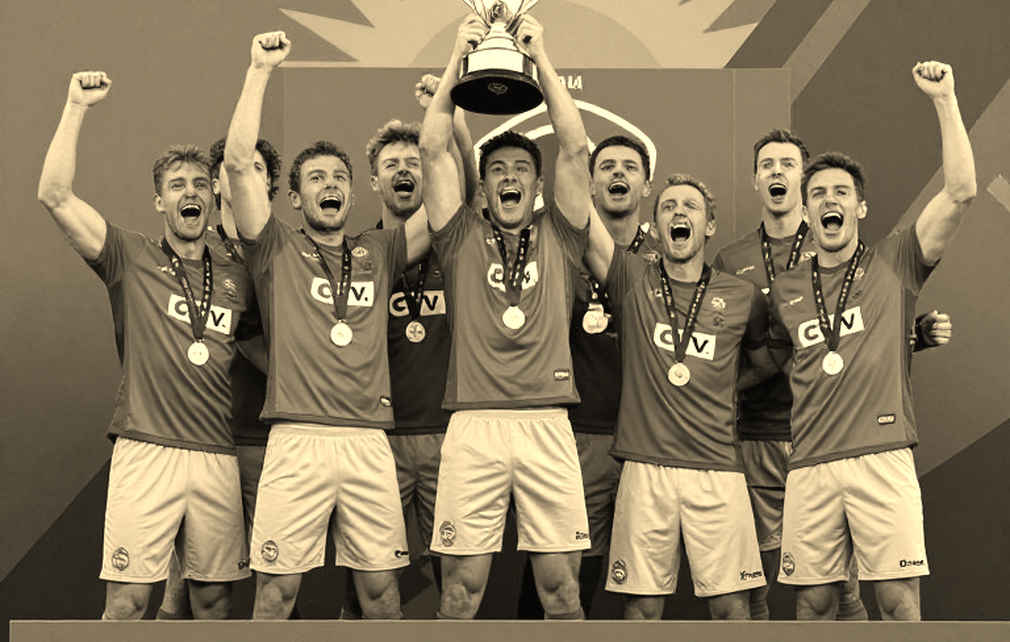
It took me eighteen years to learn that an auction price and a player's value are not the same thing. In 2026 I left the Sydney desk to follow the story after the score, and that same year I watched the Hockey India League final in Chandigarh — Kalinga Lancers beating Dabang Mumbai 4-1. I filed a 1,200-word live tactical breakdown from the stands. Forty-two thousand page views and 620 paid sign-ups in seventy-two hours. Fifteen hundred readers within six months. That night I thought I understood the league. I had understood its pitch, not its office.
The league's own life cycle is its most important fact. Launch in 2026, six seasons, suspension in 2026, then six years of silence. Return in December 2026 at Rourkela's Birsa Munda Hockey Stadium, and a full house by the final in February 2026. This is the same city that hosted the 2026 World Cup, where India lost a crossover to New Zealand on penalties and watched the quarterfinals from outside. One stand, two entirely different kinds of silence in three years.
Meanwhile the long Olympic arc kept moving. 5 August 2026, Tokyo: India beat Germany 5-4 for bronze, forty-one years after Moscow 2026. 8 August 2026, Paris: India beat Spain 2-1 for a second bronze. Between them sit the eight Olympic golds from 2026 to 2026, the 2026 World Cup in Kuala Lumpur, the 2026 Asian Games gold in Bangkok, and the 2026 Beijing non-qualification. That sequence is not a medal table. It is an institutional audit. Which is precisely why the league's ledger worries me.
Because here, labour law is written in a single day.
The Hockey India League is a market with one buyer, and the seller is not the player. Franchise, league, federation — three different sets of credibility, but in the auction room the player sits alone and someone else sets his price. There is no free agency, no loan provision, no published retention formula, and most importantly, no transfer fee. In football, when a club sells a player, that sum becomes public proof of his value and, in the same stroke, his bargaining power. In hockey, a player's value drops to zero the moment the auction ends, because he cannot be sold onward — only re-auctioned.
That single difference breaks the whole architecture. A player bought for twenty lakh in October 2026 is, by November 2026, an asset with zero resale value. The franchise has no financial reason to hold him because it cannot sell him; the player has no route elsewhere because the market opens once a year. In that one-way structure, injury is the heaviest cost — because the player carries the expense and the institution carries the benefit of the information.
Concealing injury information does not protect a player's privacy; it protects the institution that holds the contract. Recall Hardik Singh's hamstring in Tokyo 2026. Injured in a pool match, the semifinal against Belgium played without him, the bronze match with him back. Nobody measured the gap between the moment of injury and the official confirmation, because no document existed to measure it against. In the Paris 2026 quarterfinal Amit Rohidas took a red card, India held Great Britain 1-1 with ten men and won the shootout — the country watched P.R. Sreejesh's pads that night, and nobody asked which ledger would record the value of the goalkeeping vacancy after his retirement. Sreejesh retired after Paris and became coach of the junior side. That is Indian hockey's biggest transfer, and it too came without a declared contract term.
I collect the pauses the broadcast cannot hold. When Tokyo was postponed on 24 March 2026 and the stadiums emptied, I spent fourteen days on fourteen interviews for one essay, then killed three columns because they felt hollow. That period taught me that when a player competes without a crowd, the loudest thing he hears is his own injury. And no journalist is assigned to record that sound, because the league's media protocol runs only to match day.
Coaches operate under the same missing ledger, only with larger numbers. Since 2026 the Indian men's team has passed through Terry Walsh, Paul van Ass, Roelant Oltmans, Sjoerd Marijne, Graham Reid and Craig Fulton. Six names, thirteen years, and not one public performance account to establish what was achieved in which cycle and what was lost. Every exit explained in a press conference, every appointment in a press release. On the Sydney desk, covering Australia's high-performance system, the funding agreements were public — how much per sport, against which metric, and what happens if it is missed. Here it is inverted: the contract is confidential and the result is public. A public result does not mean public accountability.
The calendar is the contract nobody signed. The Pro League, the Asian Champions Trophy, the national camp and now a revived league are all crammed into the same twelve months. The money paid at auction does not account for how many hours the player spent in buses, planes and hospitals over the previous ten months. Football's transfer window begins with a medical for exactly this reason — the buyer knows he is buying a body, not a name. Hockey's auction has no public medical link in the chain.
And the women's ledger is thinner still. At Tokyo 2026 the Indian women's team reached the semifinal, lost 1-2 to Argentina, then lost the bronze match 3-4 to Great Britain. The newspapers gave that run a weekend, and forgot it within a year. The men's bronze was written against forty-one years; the women's fourth place was written against nothing, because the women's team does not even possess the historical wound that coverage can lean on. That is a failure of journalism, and I count it as mine.
Now the part least written about.
The problem is not that the league has too little money; it is that money buys the player no transferable value. When I covered Russia 2026 — which was never a results ticker for me — I built a twelve-indicator ledger on Kylian Mbappe's first ninety minutes: touches in the box, separation runs, recovery sprints. France beat Croatia 4-2 and Mbappe, at nineteen, became the second teenager after Pele to score in a World Cup final. The point of the ledger was not praise; it was to show how a player's value is constructed and who counts it. In football the club counts it, the agent counts it, a tribunal counts it. In hockey nobody counts it.
The easy argument is that transparency should be demanded from the franchises. I think that is the wrong address. A franchise is a private company with a private contract and can exit the market tomorrow. The register should not sit with the franchise but with the federation — because the player's national registration is there, his injury record is there, his age verification is there. The institution that holds a player's entire life record should hold his contract record too. It never has.
Every transfer fee hides a kid who just wanted to play. In hockey that kid arrives from an academy in Jhajjar or Sonipat, reaches a camp at eighteen, and discovers at twenty that his career rests on a piece of paper nobody read, nobody published, and no tribunal has seen.
The forward question is direct and I will not dodge it. In the Los Angeles 2028 cycle, Indian hockey needs three things: a fixed reporting window for injuries, a public register of every player's contract length and terms, and a mandatory medical audit before each auction, with the report shared with the player. None of the three costs money. Only will. If that register is not published before the next auction, we should assume the market is being kept dark on purpose — and the next bronze will belong to that darkness as well.
Will we hear the sound after the hammer next time?